There is something deeply dangerous about a society becoming obsessed with control at the exact moment when it most needs imagination.
Control of borders. Control of identity. Control of narratives. Control of who belongs and who does not. Control based on judgment, racism, economics, religion, political ideology, fear, or whatever other justification people choose to use.
But while so much energy is being poured into the idea of “establishing a national identity,” the Climate and Ecological Emergency is worsening by the minute.
That is not a side issue. That is not a separate conversation. That is the conversation.
We are living through a period when the systems we depend on are being pushed beyond their limits. Our weather patterns are shifting. Our biodiversity is collapsing. Our food systems are becoming more fragile. Our infrastructure is aging into a world it was not designed for. Our children are inheriting consequences they did not create. And instead of responding with the seriousness this moment demands, too much of our public life remains trapped in arguments about control, dominance, exclusion, and nostalgia.
That is more than shortsighted. It is dangerous.
A nation that spends its time looking backward while the planet changes around it is not protecting itself. It is weakening itself. A country that chooses fear over adaptation is not becoming stronger. It is becoming brittle.
The Climate and Ecological Emergency does not care about slogans. It does not care about borders. It does not care about political theater. It responds to physics, chemistry, biology, infrastructure, preparation, cooperation, and imagination.
And right now, we need much more imagination.
We Need to Stop Treating Climate Action Only as a Cost
One of the most damaging ideas in climate politics is that responding to the crisis is simply a financial burden.
We hear the same arguments again and again.
Who is going to pay for this?
How much will it cost?
We do not have enough money.
We cannot fund that.
We have other priorities.
But what if that entire frame is too small?
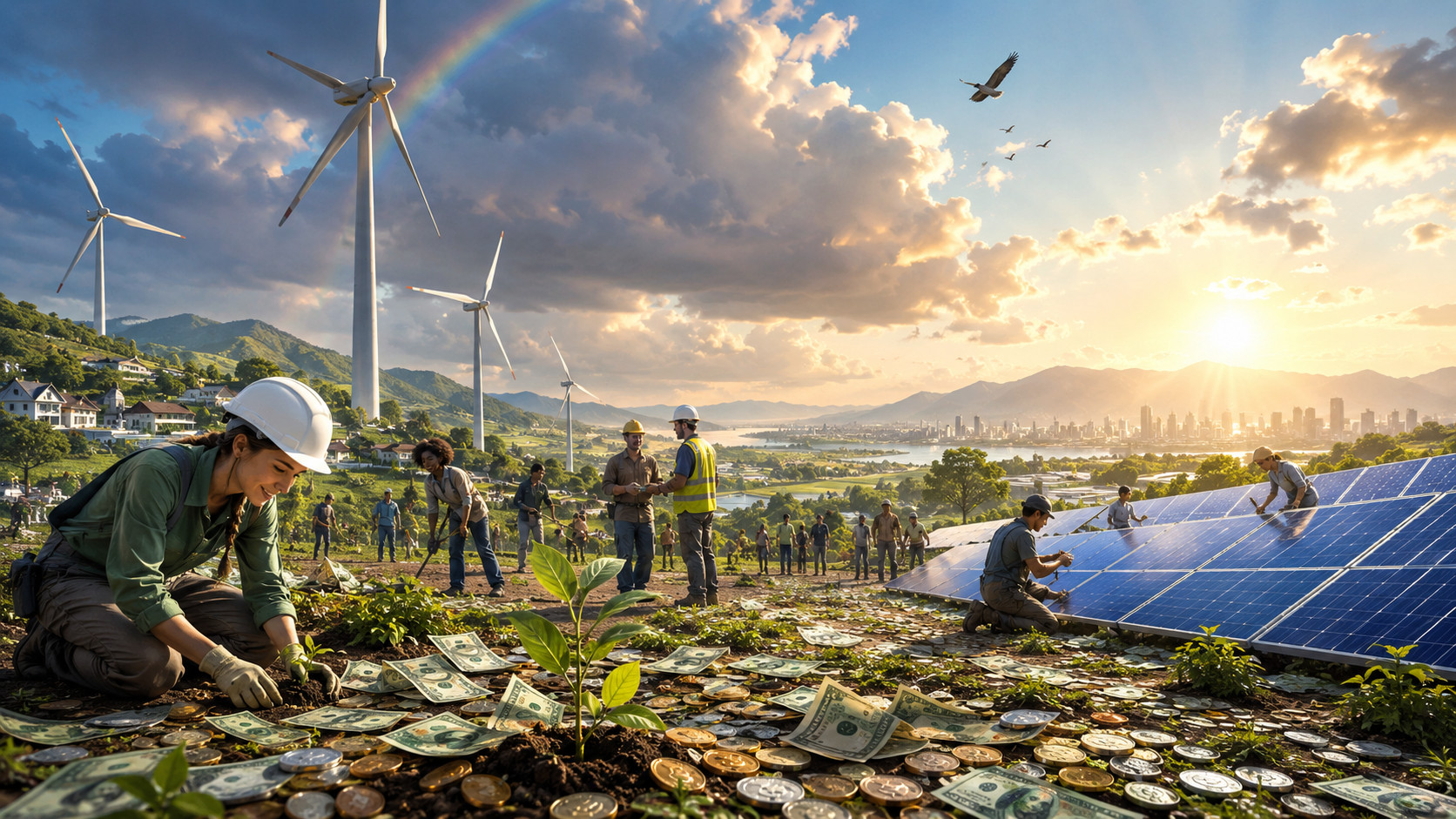
What if the Climate and Ecological Emergency is not only something we must spend money on, but something that can also help us generate new forms of local wealth, local employment, public safety, community resilience, and ecological repair?
This does not mean exploiting disaster. It does not mean turning suffering into a business model. It means understanding that adaptation itself can become an economic engine when it is designed correctly.
We should be asking better questions.
How can climate adaptation create jobs in local communities?
How can ecological repair support small businesses?
How can state contracts help mom-and-pop manufacturers build the tools of resilience?
How can auto shops, construction workers, gardeners, farmers, designers, engineers, teachers, and community organizers all become part of the climate economy?
How can the work of survival also become the work of improvement?
The point is not simply to “fund climate action.”
The point is to build systems where the actions we take to protect ourselves also generate the resources needed to continue protecting ourselves.
That is a very different way of thinking.
It moves us away from begging for scraps and toward building regenerative civic economies. It moves us away from climate action as charity and toward climate action as infrastructure, employment, innovation, and collective self-preservation.
The Climate Economy Must Be Local, Practical, and Creative
When people hear “climate innovation,” they often think of massive corporations, expensive technology, elite research labs, or distant federal programs.
Some of that may have a role. But the climate economy cannot belong only to the largest institutions. It must also belong to neighborhoods, towns, small businesses, repair shops, tradespeople, farmers, community groups, and local governments.
The next wave of climate adaptation will require practical tools.
Not just theories.
Not just reports.
Not just conferences.
Not just promises.
Actual tools.
Tools that help homes withstand new weather patterns.
Tools that help communities manage heat, flooding, wind, food insecurity, and energy disruption.
Tools that help people protect their families, their vehicles, their gardens, their housing, their local food supply, and their social networks.
And many of these tools do not exist yet.
That is not a reason to panic. It is a reason to create.
The “Nudge”: A Small Example of a Larger Possibility
Consider one idea: what I call a “nudge.”
The word may sound simple, even strange at first. But the concept points to something important.
Imagine devices installed in streets, driveways, parking lots, public facilities, and other high-risk locations that help secure electric vehicles during extreme wind events. These devices could physically lock or anchor vehicles in place when dangerous weather conditions are expected.
Some people may laugh at that idea today.
But ask again in seven to ten years.
As climate-driven extreme weather intensifies, we may find ourselves needing safety systems that sound unusual now but become obvious later. We already design buildings, bridges, storm drains, seawalls, emergency shelters, and power systems around risk. Why would vehicles, charging stations, parking areas, and transportation infrastructure be exempt from that same thinking?
The “nudge” is not just about cars. It is about a mindset.
It asks: what new adaptation tools will we need in a world of stronger storms, stronger winds, heavier rainfall, deeper heat, and more unpredictable conditions?
It also asks: who gets to build those tools?
One answer could be local manufacturers. Small machine shops. Fabricators. Auto repair businesses. Electrical contractors. Municipal suppliers. State-approved vendors. Community colleges. Technical training programs. Local entrepreneurs.
A state could contract with small businesses to manufacture the street, driveway, and parking-lot components. Auto repair shops could produce or install the vehicle-side attachments. Local workers could maintain the systems. Municipalities could identify priority zones. Communities could decide where these tools are most needed.
Suddenly, one adaptation idea becomes many things at once:
A safety measure.
A manufacturing opportunity.
A state-level economic program.
A local jobs creator.
A training pathway.
A public infrastructure upgrade.
A climate resilience tool.
That is the kind of thinking we need.
Not every idea will work. Not every prototype will survive testing. Not every concept will become policy. But we will never build a climate-resilient society if we are afraid to imagine practical solutions before they become obvious.
The future will belong to communities willing to prototype survival.
This Applies Far Beyond Vehicles
The “nudge” is only one example. The same approach could apply to food production, clothing production, gardening, housing construction, community engagement, water systems, emergency communications, local energy, public health, and neighborhood preparedness.
In food production, climate adaptation could mean supporting local growers, indoor agriculture, community gardens, seed-saving networks, drought-resistant methods, soil restoration, and neighborhood food hubs.
In clothing production, it could mean designing garments for heat, smoke, flooding, storms, and emergency mobility while creating local textile jobs.
In housing construction, it could mean retrofitting homes for heat resilience, flood resistance, wind protection, passive cooling, backup power, and safer indoor air.
In gardening, it could mean turning yards, rooftops, vacant lots, schools, and public spaces into ecological assets that support food, shade, pollinators, stormwater absorption, and community education.
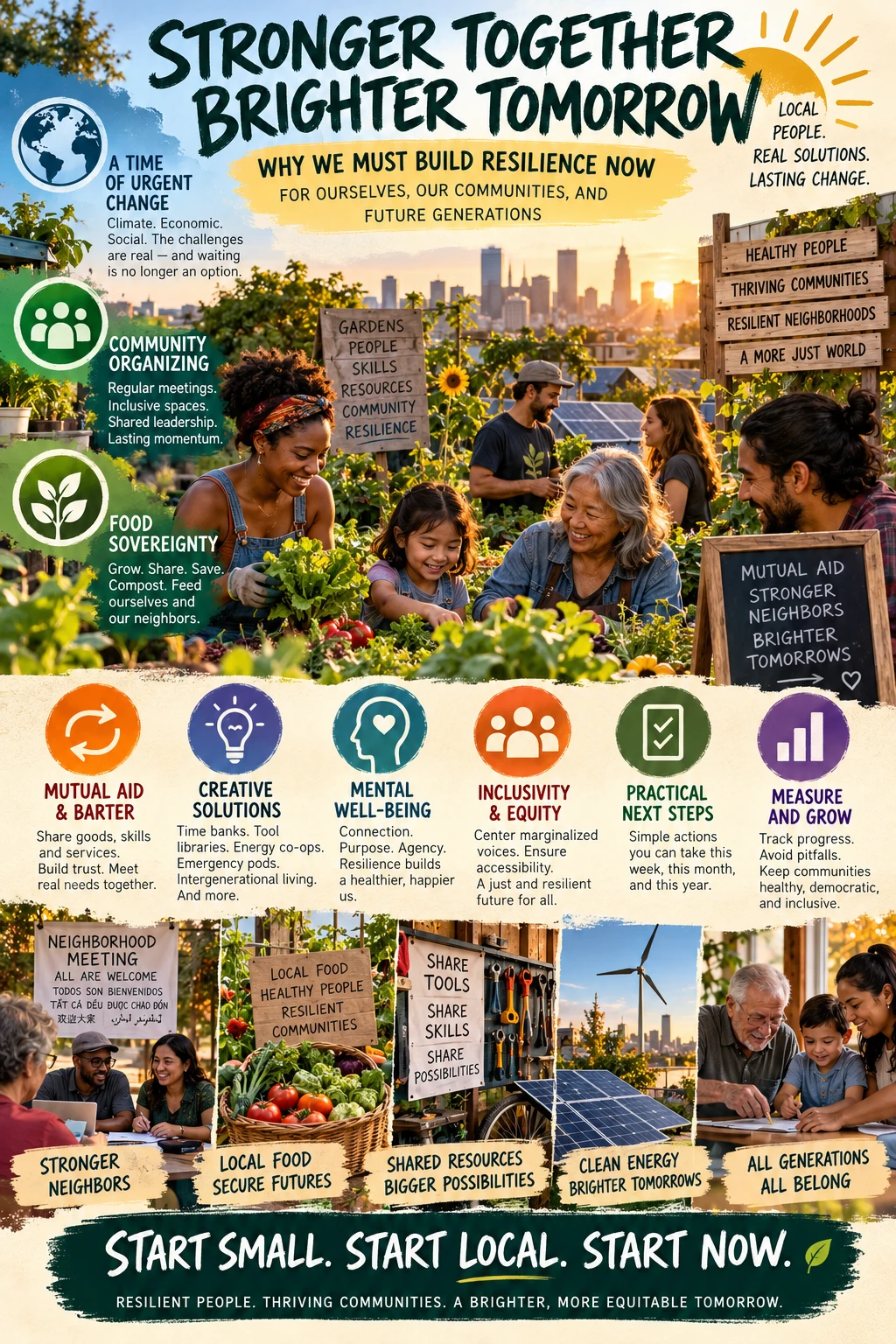
In community engagement, it could mean training residents not merely to “be aware” of climate risk, but to become active participants in adaptation planning and mutual aid.
This is where the grassroots level matters.
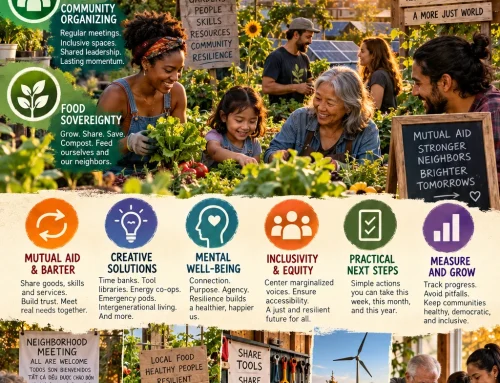
A climate-resilient society cannot be built only from the top down. It must also rise from the ground up.
People need to see themselves not only as victims of climate disruption, but as builders of climate response. They need to see that adaptation is not just something done to them by experts. It is something they can help shape, design, demand, build, and improve.
AI Is Not the Enemy — It Is a Mirror and a Tool
This is also where AI becomes important.
There is a lot of fear around artificial intelligence, and some of that fear is understandable. AI can be misused. It can amplify bias. It can accelerate bad decisions. It can concentrate power. It can produce shallow answers when people need wisdom.
But AI itself is not the enemy.
We are already doing a fine job of endangering ourselves without AI.
AI reflects us. It reflects our intentions, our questions, our blind spots, our creativity, our priorities, and our failures. If we use it carelessly, it can magnify carelessness. If we use it extractively, it can magnify extraction. If we use it only for profit without ethics, it can magnify harm.
But if we use it for climate imagination, community planning, design thinking, public education, local economic development, and adaptive resilience, it can help us accelerate ideas that would otherwise remain trapped in someone’s notebook at three in the morning.
That matters.
Because many people have ideas. Working people have ideas. Young people have ideas. Elders have ideas. Farmers, mechanics, teachers, nurses, parents, builders, organizers, and students have ideas. But not everyone has access to engineers, policy writers, grant writers, designers, or technical consultants.
AI can help bridge some of that gap.
It can help turn raw thoughts into proposals.
It can help turn proposals into diagrams.
It can help turn diagrams into business plans.
It can help turn business plans into community presentations.
It can help turn community presentations into policy language.
It can help people refine ideas, test assumptions, ask better questions, and communicate more clearly.
That does not replace human judgment. It strengthens human imagination when used responsibly.
The goal is not to let AI think for us.
The goal is to use AI to help us think more deeply, more creatively, more cooperatively, and more urgently.
Nationalism Cannot Save Us From Planetary Emergencies
Now we return to the first point: control and national identity.
At first, it may seem like a separate issue. What does nationalism have to do with local climate innovation, AI, and grassroots economics?
Everything.
Because the Climate and Ecological Emergency exposes the limits of isolation.
Imagine a country that fully commits itself to a narrow, exclusionary nationalism. It tells itself that strength means shutting others out. It attacks immigrants. It dismisses foreign expertise. It treats cooperation as weakness. It claims greatness while rejecting the very people, knowledge, goods, and relationships needed to survive.
In a worsening climate emergency, that country would become deeply hypocritical.
Why?
Because no nation can adapt alone.
The United States, or any country, will need help from South America, Asia, Europe, Africa, and the rest of the world. It will need products, yes: steel, agricultural goods, minerals, technologies, medicines, components, and materials. But even more than products, it will need minds.
It will need scientists.
Engineers.
Climate modelers.
Farmers.
Urban planners.
Public health experts.
Ecologists.
Emergency managers.
Policy thinkers.
Builders.
Designers.
Technicians.
Immigrant communities with knowledge from other climates and survival traditions.
People who can see ten years ahead.
People who can see one hundred years ahead.
A nation obsessed with control may be able to manipulate a narrative for a while. It may convince some people that it is strong, independent, pure, chosen, or invincible.
But narratives do not stop floods.
Narratives do not cool cities.
Narratives do not restore soil.
Narratives do not rebuild after storms.
Narratives do not grow food during drought.
Narratives do not hold infrastructure together.
Narratives do not replace scientific expertise.
When emergencies reach scales we have never seen before, fantasy becomes fatal.
True Security Comes From Adaptive Cooperation
The old idea of security is too narrow.
Security is not only military strength.
Security is not only border control.
Security is not only policing.
Security is not only economic dominance.
Security is not only national mythology.
In the age of climate and ecological disruption, security means the ability to adapt.
It means resilient food systems.
Stable housing.
Reliable energy.
Clean water.
Healthy ecosystems.
Disaster-ready infrastructure.
Public trust.
Scientific literacy.
Local manufacturing capacity.
Regional cooperation.
Global relationships.
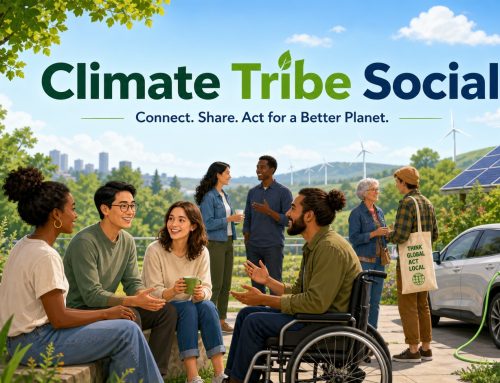
Strong communities.
Shared knowledge.
A country that rejects cooperation in this century is not protecting itself. It is isolating itself from the very intelligence required to survive.
This is why climate action must also be a cultural transformation.
We must move from domination to participation.
From extraction to regeneration.
From isolation to cooperation.
From fear to imagination.
From passive consumption to active adaptation.
From “Who do we keep out?” to “How do we survive and improve together?”
We Need a New Civic Imagination
The Climate and Ecological Emergency is not only a scientific crisis. It is also a crisis of imagination.
Too many people cannot imagine an economy that does not destroy the environment.
Too many people cannot imagine politics without enemies.
Too many people cannot imagine technology serving communities instead of exploiting them.
Too many people cannot imagine local businesses as climate resilience partners.
Too many people cannot imagine ordinary residents as designers of adaptation.
Too many people cannot imagine cooperation as strength.
But imagination is not fantasy.
Imagination is how societies prepare for realities that have not fully arrived yet.
Before every bridge, someone imagined a crossing.
Before every school, someone imagined public learning.
Before every emergency system, someone imagined organized response.
Before every right, someone imagined a more just society.
Now we must imagine climate resilience before collapse makes it mandatory.
The “nudge” may or may not become a real device. But the deeper idea behind it must become real: we need practical, local, creative, income-generating adaptation tools that protect people while strengthening communities.
That is the opportunity.
Not opportunity in the shallow sense of profit above all else. Opportunity in the deeper sense of turning necessity into transformation.
The Work Ahead
We do not have all the answers.
No single person does. No single country does. No single company does. No single political party does. No single technology does.
But we do have creativity. We have communities. We have AI tools. We have local knowledge. We have young people who deserve better. We have workers who can build. We have scientists who can guide. We have organizers who can connect. We have small businesses that can adapt. We have states that can contract, fund, train, and coordinate.
What we need now is the courage to connect these pieces.
We need state-level climate resilience programs that intentionally include small businesses.
We need public contracts designed to support local adaptation manufacturing.
We need AI-assisted idea labs for communities.
We need climate resilience training in schools, libraries, unions, community colleges, and neighborhood organizations.
We need policy that rewards prevention, not just disaster recovery.
We need economic models that treat ecological repair as productive work.
We need a public conversation that is honest about the emergency but still committed to possibility.
Above all, we need to stop pretending that control is the same as strength.
Control is brittle.
Adaptation is strength.
Cooperation is strength.
Creativity is strength.
Ecological intelligence is strength.
Community preparedness is strength.
The ability to learn from others is strength.
The Climate and Ecological Emergency is worsening, and it will test every story we tell about who we are.
If our story is based on exclusion, denial, and control, we will fail that test.
But if our story is based on adaptation, cooperation, innovation, humility, and shared survival, then we may still build something worthy of the future.
Not because we had all the answers from the beginning.
But because we finally became serious enough to ask the right questions.
cCc thoughts / AI Enhanced