See original version of this post here…
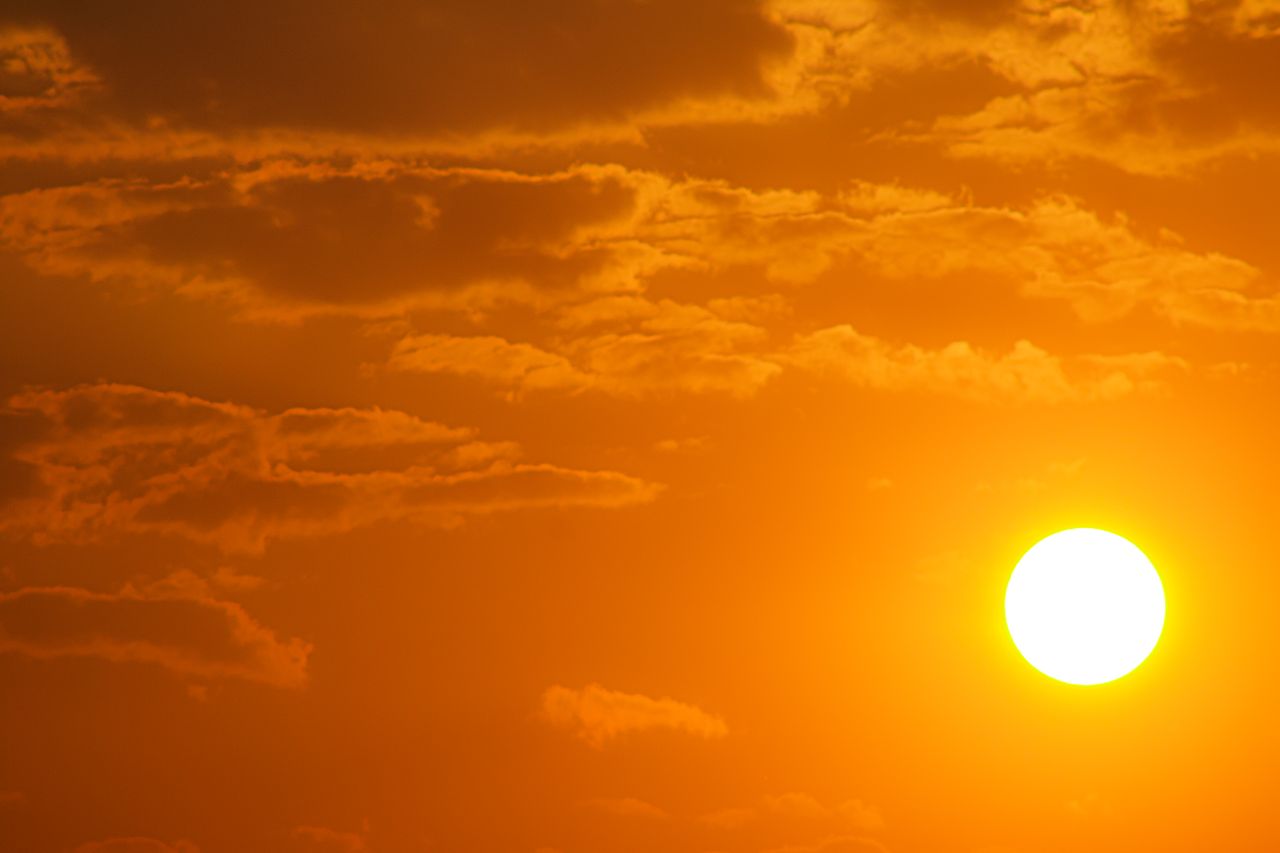
A heat dome over the East Coast is testing more than our bodies. It is testing our honesty, our ethics, and whether we are willing to protect our children and the living world.
cCc | Thoughts Enhanced through AI Assistant
The air above the eastern United States is becoming a lid.
For Wednesday, July 15, the National Weather Service is forecasting temperatures near 99 degrees Fahrenheit in New York City, with the heat index rising above 100. Philadelphia and Baltimore are both forecast to reach approximately 101 degrees, with humidity making conditions feel even hotter. These are not abstract numbers on a weather map. They describe apartments that may not cool overnight, outdoor workers laboring under dangerous conditions, children playing on scorching pavement, elderly neighbors afraid of the cost of air-conditioning, wildlife searching for water, and emergency rooms preparing for preventable suffering.
This is the moment when too many people still shrug and say, “It is summer. Summer is hot.”
But that response is no longer adequate. It ignores what climate scientists have warned for decades: human-caused warming is loading the atmosphere in favor of more intense, more persistent, and more dangerous heat. A heat wave can be a weather event. The worsening pattern is climate change. The IPCC has concluded that human influence has already increased hot extremes and that additional warming will make heat waves more frequent and severe.
In a recent conversation with independent journalist Jim Acosta, prominent climate scientist Dr. Michael E. Mann explained why heat can become trapped over a region and why these events are becoming harder to dismiss as ordinary summer discomfort. His message should not be treated as background noise. It should be heard as an emergency communication to the public.
Mann has described this kind of event plainly: “This really is a very dangerous extreme weather phenomenon.”
His research with colleagues found that atmospheric patterns associated with persistent heat domes, floods, and wildfires have nearly tripled since the 1950s. The study examined a jet-stream behavior known as quasi-resonant amplification, in which large planetary waves become amplified, align, and stall. When the atmosphere locks into that pattern, a weather system can remain over the same place for days, intensifying the damage below.
A heat dome is commonly explained as a strong area of high pressure that traps hot air and suppresses the movement of cooler air and rain. Air sinks beneath the high pressure, compresses, and warms. Clearer skies allow more sunlight to heat the ground. Dry soils can intensify the process because less energy is used to evaporate moisture, leaving more energy to heat the air. The longer the pattern remains in place, the more the heat builds upon itself.
Climate change does not create every high-pressure system. It changes the conditions in which those systems occur.
The baseline is hotter. Heat waves can begin from a warmer starting point, reach higher temperatures, cover larger regions, and remain dangerous for longer. Mann and his colleagues also point to changes in the jet stream connected to the uneven warming of the planet, including rapid Arctic warming, as part of the reason certain extreme patterns can become stuck.
This is what makes the phrase “just weather” so misleading. Weather is the event outside your window. Climate is the system that increasingly shapes the odds, severity, and consequences of that event.
Extreme Heat Is a Silent Killer
Hurricanes arrive with satellite images, names, dramatic wind speeds, and visible destruction. Tornadoes announce themselves with sirens. Floodwaters rise into streets and homes.
Extreme heat often kills quietly.
It can begin with dizziness, exhaustion, headache, nausea, cramps, confusion, or a racing pulse. It can place enormous stress on the cardiovascular system and kidneys. It can worsen existing heart, respiratory, metabolic, and mental-health conditions. It can contribute to heart attacks and strokes. Heatstroke is a medical emergency that can rapidly become fatal.
The National Weather Service and NOAA describe extreme heat as a leading weather-related killer in the United States. The World Health Organization warns that the body’s effort to regulate temperature during extreme heat strains the heart and kidneys and can aggravate chronic disease.
The danger is often greatest when the night stays hot.
A person’s body needs relief. A home needs time to cool. When nighttime temperatures remain elevated, heat accumulates across consecutive days. People without reliable air-conditioning, people who cannot afford high utility bills, outdoor workers, unhoused people, older adults, infants, pregnant people, and those with chronic illnesses face disproportionate risk. Forecasters and health experts specifically warn that hot nights prevent the body from recovering from the preceding day’s heat.
Heat is therefore not only a climate issue. It is a housing issue, a labor issue, a public-health issue, an energy issue, and an issue of justice.
The question is not merely whether a city reaches 100 degrees.
The question is who has shade.
Who has clean water.
Who has a cooling center nearby.
Who can stop working.
Who lives beneath trees, and who lives beside asphalt and concrete.
Who can leave, and who is trapped.
When we speak about resilience, we must not use that word as an excuse to make vulnerable people endure conditions that powerful institutions refused to prevent. Real resilience means reducing the danger while strengthening communities’ ability to survive what can no longer be avoided.
The Public Is Frightened—and Paying Attention
The comments beneath Acosta’s interview reveal something that statistics alone cannot: people are frightened, angry, and searching for language strong enough to describe what they are witnessing.
One commenter, @AwkballOddward, wrote:
“Trillionaire fossil fuel giants will live in air conditioned high rises while our young sizzle and die.”
The wording is raw, but the moral concern is unmistakable.
Climate danger is not distributed equally. Those who have benefited most from the fossil-fuel economy are often best insulated from its immediate harms, while children, low-income communities, workers, and future generations inherit the risk.
Another commenter, @elvinabarclay6187, described conditions in Toronto:
“Here in Toronto, Ontario today it felt like 45c with the humidity today. That’s 114F in American.”
That is a personal report rather than a scientific measurement, but it speaks to the lived reality of humid heat: the number on the thermometer does not fully describe what the human body experiences.
@chriskelly6559 warned:
“Fresh water is going to be a major problem in the very near future, especially in the western U.S.”
That concern reaches beyond any single heat dome. Extreme heat can intensify evaporation, dry soils and vegetation, increase water demand, worsen drought impacts, stress reservoirs, and heat rivers and lakes. Water insecurity, food insecurity, wildfire risk, and ecosystem decline do not exist in separate compartments. They interact.
Perhaps the most vivid comment came from @nmarks, who compared the planet to a covered pan of water heated on a stove.
The analogy is scientifically imperfect. Earth is not literally becoming Venus, and the greenhouse effect does not operate exactly like a metal lid over a saucepan. But the commenter’s central intuition is valid: continuing to add heat-trapping gases to the atmosphere while expecting no accumulating consequences is reckless.
Public fear should not be mocked. It should be directed toward knowledge, solidarity, preparedness, and democratic action.
Despair can paralyze. Anger can be manipulated. But informed moral clarity can move people.
Our Children and Biodiversity Deserve Better
Every child born today enters a climate system altered by decisions they did not make.
They did not approve the extraction of coal, oil, and gas.
They did not design communities around endless combustion.
They did not weaken environmental protections, delay clean-energy investment, or reward leaders who treated scientific evidence as an inconvenience.
Yet they will live with the consequences.
Children are not simply “future generations.” They are here now.
They attend schools with aging cooling systems. They ride buses during heat advisories. They play sports on artificial turf and blacktop. They live in homes where families must choose between air-conditioning, food, medicine, and rent. Their developing bodies are vulnerable, and their emotional lives are shaped by the knowledge that the adults in charge understand the danger but still struggle to respond at the necessary scale.
The injustice extends beyond humanity.
Heat waves can reduce water availability, damage vegetation, disrupt breeding and migration, worsen wildfire conditions, alter food webs, and push species beyond their thermal limits. Climate change acts alongside habitat destruction, pollution, overexploitation, and invasive species, compounding the biodiversity emergency.
The Intergovernmental Science-Policy Platform on Biodiversity and Ecosystem Services has warned that climate-related extinction risks rise with additional warming. The IPCC has likewise concluded that every increment of warming increases risks to people and ecosystems.
Biodiversity is not scenery.
It is the living infrastructure of the planet: pollination, soil formation, water purification, carbon storage, food webs, genetic diversity, and ecological relationships built over deep time.
When species disappear, the loss is permanent on any human timescale.
We have no ethical right to treat millions of years of evolution as expendable collateral for a few more decades of political convenience and fossil-fuel profit.
Voting Is Climate Action
Personal choices matter.
Conserving energy, reducing waste, changing transportation habits, planting trees, protecting water, supporting local food systems, and helping neighbors during heat emergencies are meaningful actions.
But no collection of personal choices can substitute for ethical governance.
Building codes determine whether homes and schools can withstand extreme heat. Labor standards determine whether workers receive water, shade, rest, and protection. Utility policy determines whether families lose power during dangerous temperatures. Transportation and land-use decisions determine pollution, tree cover, and access to essential services. Environmental agencies monitor hazards and enforce protections. Public investment determines whether clean energy, resilient grids, cooling centers, urban forests, and emergency systems are available before disaster strikes.
All of these are political decisions.
This is why voting must be understood as an act of climate responsibility.
Not blind loyalty to a party, personality, slogan, or culture-war performance—but careful judgment about character, evidence, competence, and the public good.
Before giving anyone power, ask whether that person accepts the basic findings of climate science.
Ask whether they support reducing fossil-fuel pollution at the speed the emergency requires.
Ask whether they will protect independent science and public institutions.
Ask whether they support adaptation for communities already experiencing harm.
Ask whether they will protect children, workers, older adults, low-income neighborhoods, and biodiversity.
Ask whether their financial relationships create conflicts between public safety and private profit.
Ask whether they tell the truth when the truth is politically inconvenient.
Then keep asking after the election.
Democracy is not a one-day transaction. Voting is the beginning of accountability, not the end.
Ethical leaders require an informed public that attends meetings, reads policies, submits comments, supports responsible journalism, organizes locally, challenges corruption, and refuses to let climate promises disappear after campaigns end.
We do not need leaders who pose beside disasters after ignoring warnings.
We need leaders who prevent avoidable suffering, prepare honestly for unavoidable impacts, and act with humility toward future generations.
We need public servants who understand that a child’s right to a livable future is more important than a donor’s right to preserve a destructive business model.
The Obstacles Are Not Technological
Mann’s most important message is not that we are helpless. It is that the worsening can be limited.
“The obstacles aren’t physical. They’re not technological,” he has said.
Renewable power, energy efficiency, storage, electrification, modernized grids, cleaner transportation, urban cooling, building retrofits, ecosystem restoration, and climate-smart public planning are not fantasies.
The precise mix will vary by place, and every technology carries tradeoffs that must be governed responsibly. But the broad direction is clear: move away from the unrestricted burning of fossil fuels, reduce heat-trapping pollution rapidly, and invest in resilient communities. The IPCC finds that deep, rapid emissions reductions alongside accelerated adaptation would reduce future losses and damages.
The largest barriers are political delay, concentrated power, disinformation, short-term thinking, and the normalization of preventable harm.
That is why voices such as Michael Mann’s matter.
Scientists should not have to become permanent emergency broadcasters, repeating the same warning while emissions accumulate. Yet their willingness to explain the evidence is a public service.
And that is why independent journalists such as Jim Acosta matter.
Democracy cannot respond intelligently to a crisis when facts are buried beneath spectacle, intimidation, or manufactured doubt. Journalism that brings scientists directly before the public helps close the distance between research, lived experience, and civic responsibility.
Dr. Mann and Mr. Acosta deserve our thanks—not because an interview alone can change the climate, but because truth-telling is a necessary condition for action.
Wake Up, Humanity
We are not being asked to care about a distant century.
We are being asked to care about the person in the apartment upstairs tonight.
The sanitation worker on the morning route.
The delivery driver climbing another flight of stairs.
The child practicing on an overheated field.
The elder whose medication increases heat sensitivity.
The family deciding whether they can afford to run the air-conditioner.
The bird searching for a shrinking pool of water.
The tree enduring another season of heat, drought, pests, and smoke.
We are being asked whether knowledge will change our behavior.
The heat dome over the East Coast will eventually move or weaken. The larger danger will remain.
Another city will break another record.
Another community will flood, burn, dry out, or suffocate beneath smoke.
We will again be told that the event is unprecedented, while the pattern becomes increasingly familiar.
We must not allow familiarity to become surrender.
Humanity, please wake up.
Vote for people who demonstrate ethics rather than merely advertise them.
Vote for people who respect science, protect the vulnerable, defend biodiversity, and understand that public office is a responsibility to the living and the unborn.
Keep voting.
Keep watching.
Keep questioning.
Keep organizing.
Keep building community resilience.
Refuse the lie that nothing can be done, and refuse the equally dangerous lie that small adjustments will be enough.
Our children deserve adults who did not look away.
The living world deserves a civilization capable of restraint, responsibility, and care.
And history will remember whether, in the years when the warnings became impossible to ignore, we chose courage—or continued turning up the heat.
cCc