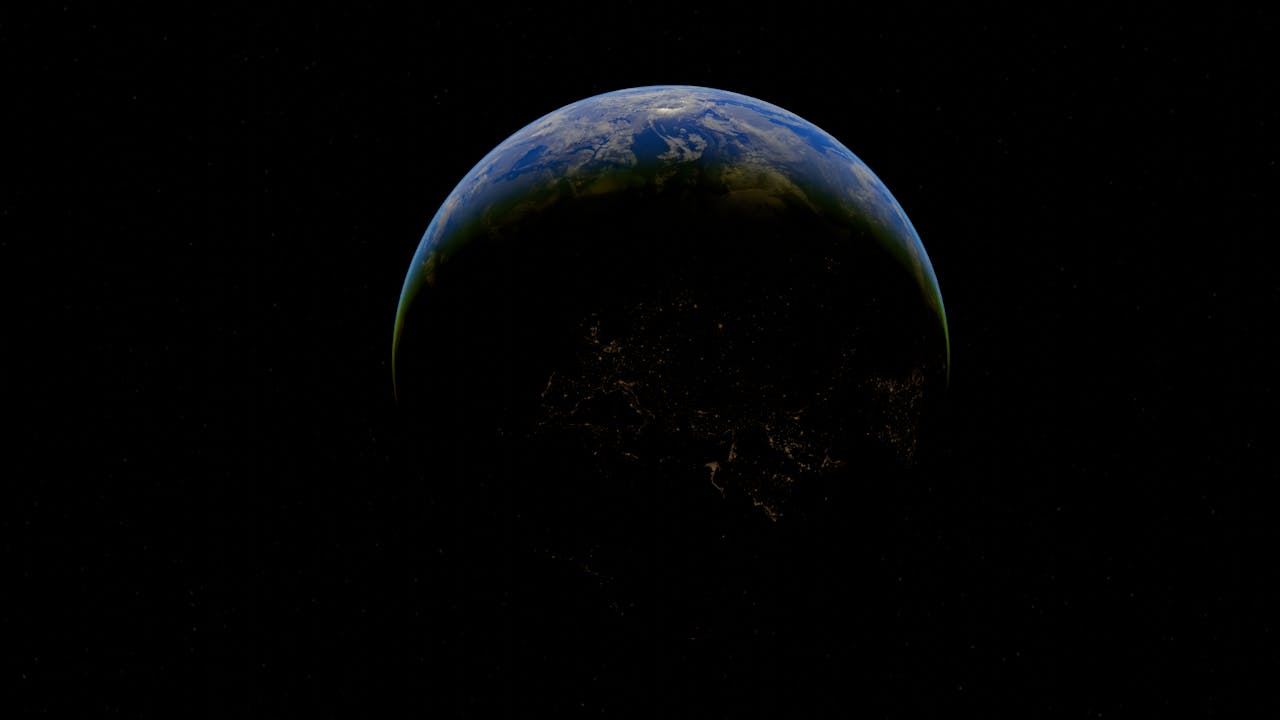
Earth Day is almost here, and the message feels impossible to ignore.
What is happening right now around fossil fuels does not feel subtle. It feels like the Earth is yelling: Hey! You have an opportunity right in front of you. Move. Change. Build something better while the old system is stumbling over its own feet.
That may sound dramatic, but look at the moment we are in. The latest global energy shock tied to the war with Iran has once again exposed how vulnerable fossil-fuel dependence really is. Yet this time, something is different. As journalist Jonathan Mingle wrote in The New York Times, this is the first oil crisis in which clean alternatives to oil and gas — solar panels, wind turbines, electric vehicles, and batteries — are both inexpensive and widely available. That matters. It means this crisis is not only a warning. It is also an opening. The New York Times
Across the world, that opening is already visible. France has announced a major electrification push, including expanded support for electric vehicles and a target of installing an extra 1 million heat pumps a year by 2030. In the U.K., the government approved the Springwell Solar Farm in Lincolnshire — described as the country’s largest power-producing solar farm — while ministers said the move would help “bring stability and lower bills in an uncertain world.” The Labour government says it has now approved 25 nationally significant clean-energy projects, together enough to power the equivalent of more than 12.5 million homes. Reuters The Guardian UK Government
China, meanwhile, exported a record number of electric vehicles and hybrids in March. Bloomberg reported that those exports jumped 140% from a year earlier to 349,000 units, a sign that when fuel prices rise and fossil-fuel instability deepens, people and markets do start looking seriously at alternatives. Bloomberg
So no, I do not accept the argument that because many people still drive gas-powered vehicles or live in buildings heated by oil and gas, we cannot change. We can. We must. The presence of fossil-fuel infrastructure is not proof that transformation is impossible. It is proof that transformation has to be intentional, urgent, and scaled.
And yes, this message is also for the anti-science voices and the fossil-fuel hired hands. This moment is an opportunity for you too. We do not need to keep pretending that dependence is destiny. We can electrify. We can expand wind. We can scale solar. We can redesign buildings, transportation, and local economies around resilience rather than addiction to volatility. We can build systems that do not collapse every time the fossil-fuel market convulses.
For me, this is not abstract.
What woke something deeper in me — something already close to the surface — is the realization that our children do not have time for us to keep debating whether we are ready to change. Readiness is no longer the standard. Necessity is. We must transform now.
There are times in private when I cry over what our children are inheriting. I think about biodiversity. I think about ecological decline. I think about how easy it is for people to mistake a quiet day for a safe future. Just because the wind is light today and the sun only burns a little does not mean danger is not building. It is. And the level of confidence I have in what is coming is exactly why I keep speaking.
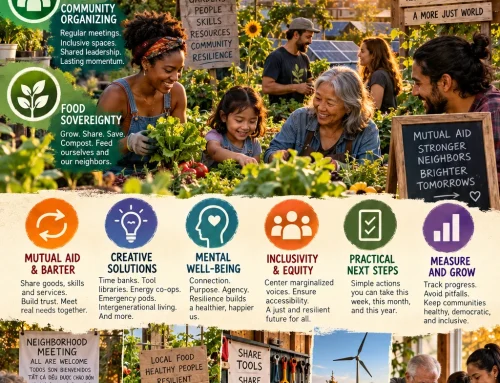
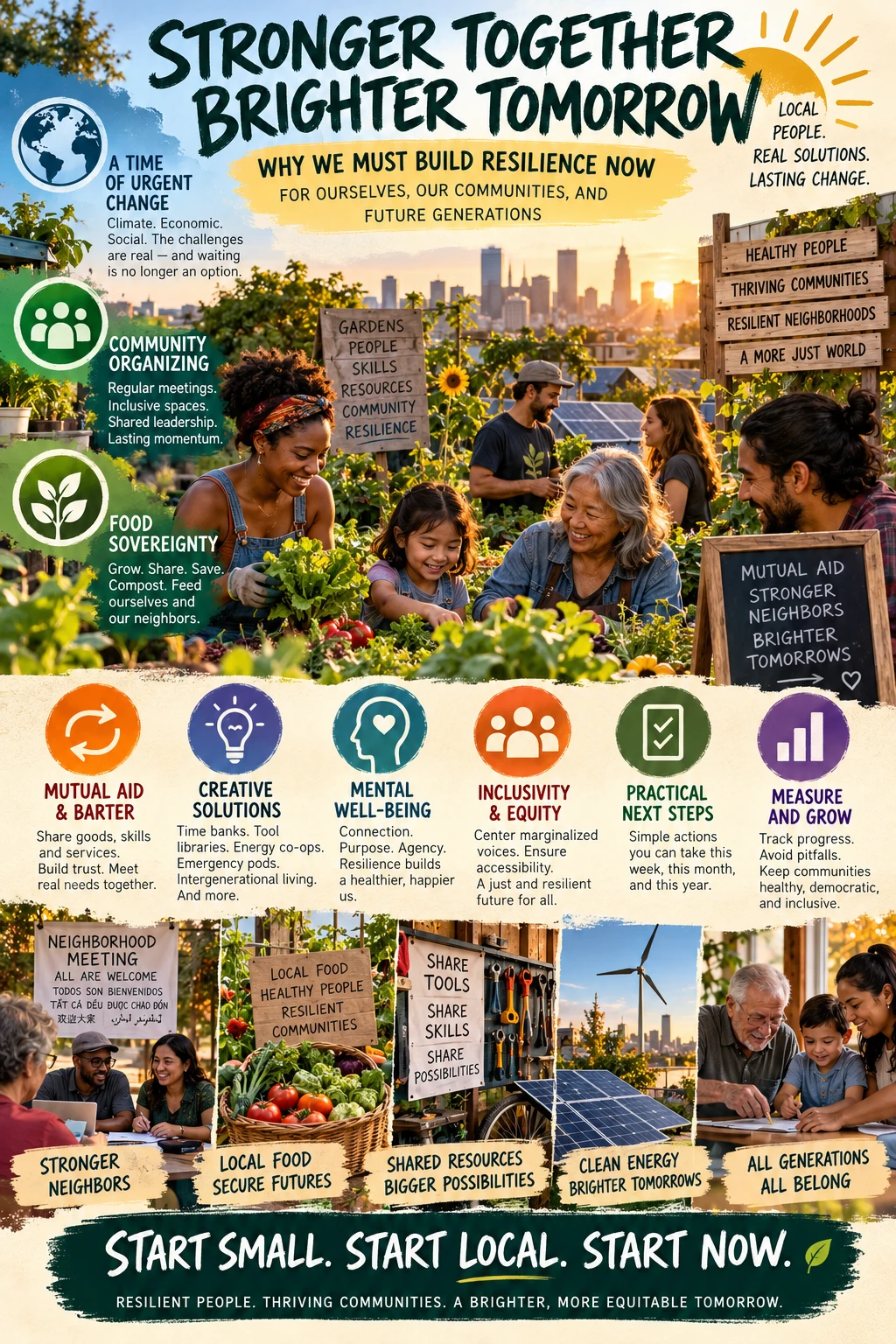
I also believe something else, and I believe it deeply: the reversal of the climate and ecological emergencies can become a path to economic uplift. I believe villages, rural communities, inner cities, and whole states can improve their financial standing by helping lead adaptation, resilience, and clean-energy transformation. I do not claim to have every answer yet. But I do believe that if we are creative and courageous enough, we can turn challenge into value, protection, employment, and dignity — especially for those who have too often been left behind.
And if we are serious about the era we are entering, then we need to start treating resilience work like the frontline mission that it is. Firefighters. Nurses. Emergency services. Law enforcement. Infrastructure workers. Essential workers. These are not side characters in the climate era. They are central to it. If we want young people to aspire toward the kinds of roles that will hold communities together in crisis, then we need to honor those roles accordingly — culturally, politically, and economically.
We cannot let fossil fuels keep us in chains. We cannot let dependence masquerade as realism. And we cannot keep allowing short-term comfort to outweigh the long-term survival of our children and the living world around them.
Earth Day should not be reduced to slogans, hashtags, or symbolic gestures. It should be a line in the sand.
The Earth is yelling.
The only real question is whether we are finally ready to listen.
Attribution note
This post was inspired in part by climate reporting and commentary referenced in a Yale Climate Connections newsletter edited by Sara Peach, including Jonathan Mingle’s New York Times essay, Reuters reporting on France’s electrification push, The Guardian’s reporting on the Springwell solar farm, the U.K. government announcement on Springwell, Bloomberg’s report on China’s EV export surge, and AP/NBC reporting featuring Jeff Masters.