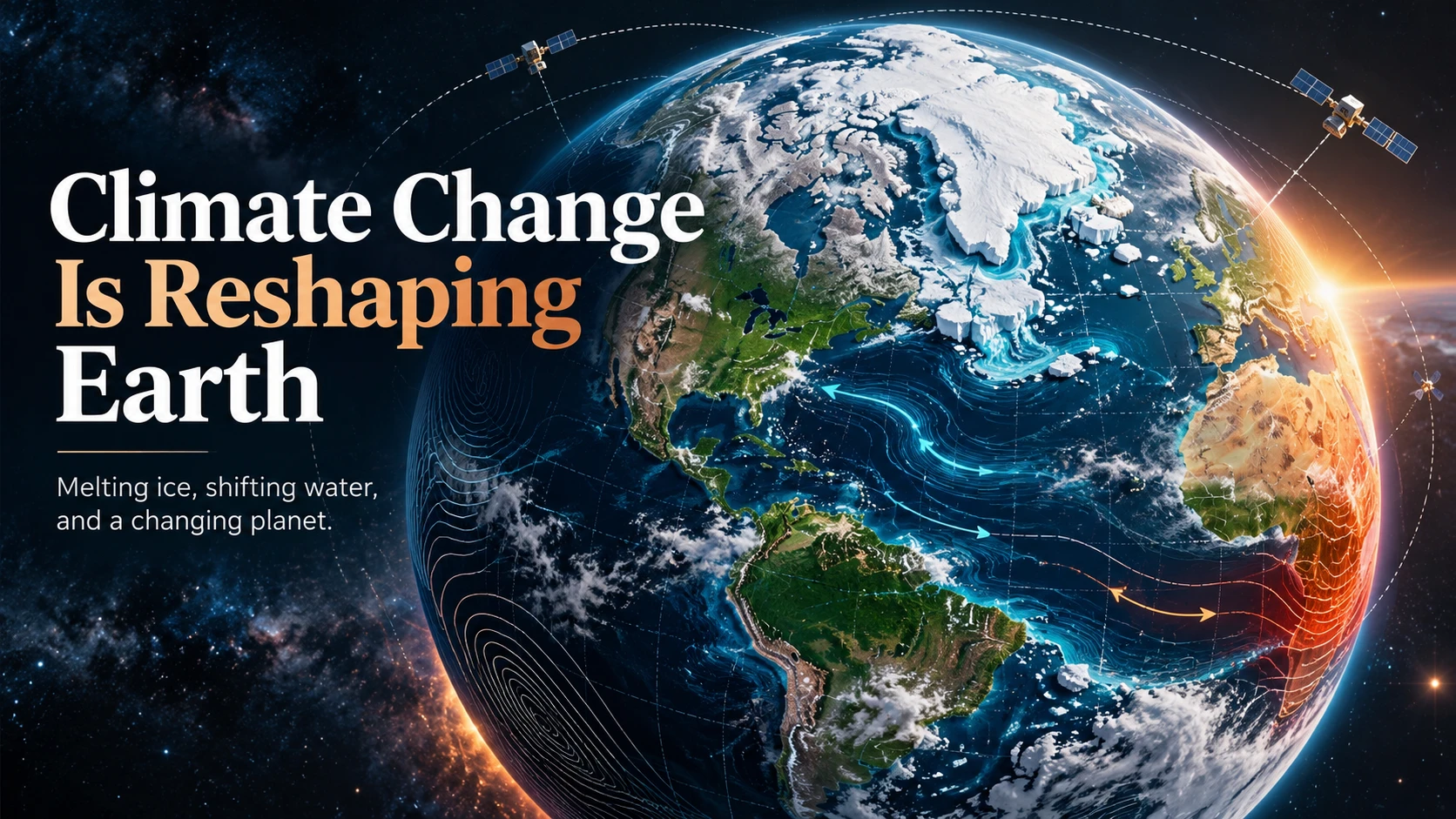
“We cannot stop all the warming already set in motion—but we can still decide how much worse it gets.”
The Moment We’re In: From Warnings to Lived Reality
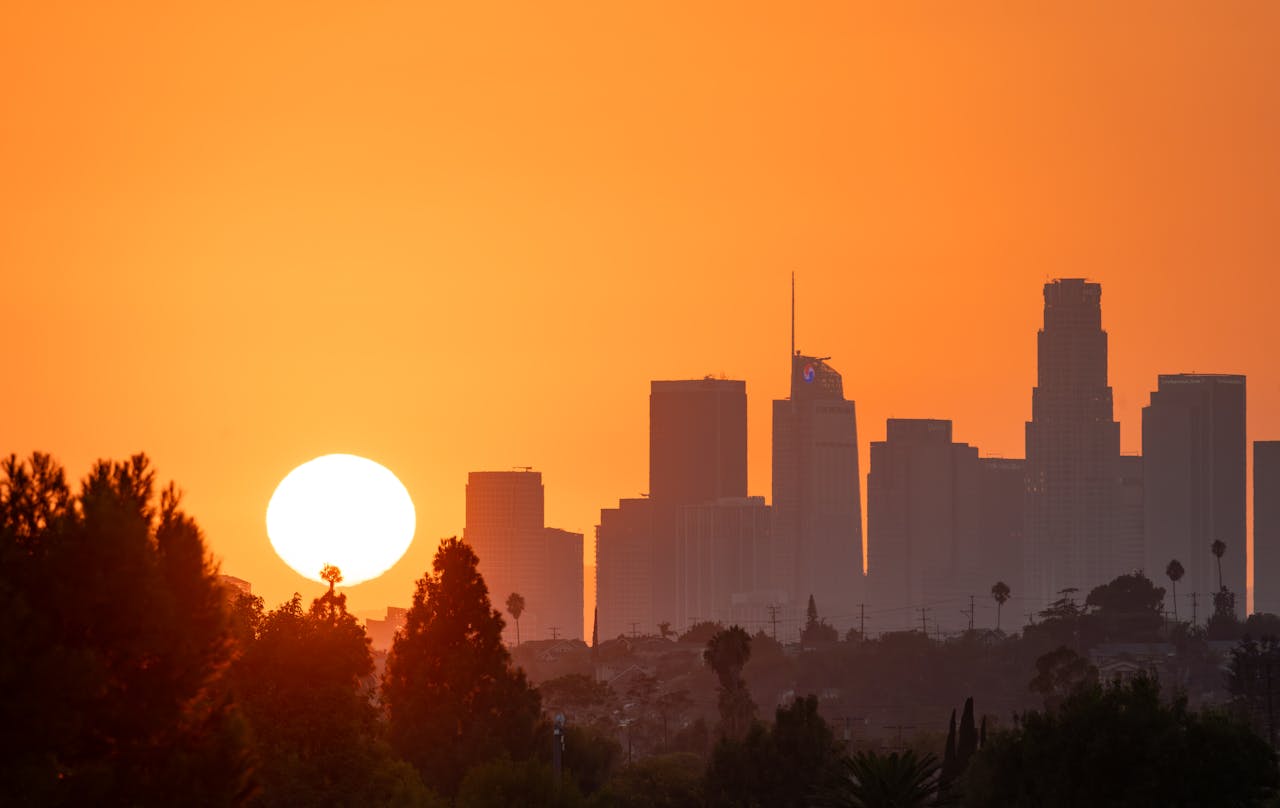
Across the world, what once felt like distant projections are now daily experiences. Heatwaves stretch longer. Nights don’t cool. Soil dries faster than it can recover. Rivers shrink. Wildfire seasons expand.
According to the World Meteorological Organization, heatwaves have increased in both frequency and intensity since the mid-20th century. Meanwhile, findings from NOAA show that warming temperatures are accelerating land drying—even in places where rainfall hasn’t dramatically decreased.
This is how climate change becomes visible:
- Crops stressed before harvest
- Power grids strained under extreme cooling demand
- Urban neighborhoods turning into heat traps
- Water systems pushed toward scarcity
We are approaching what scientists describe as a “hothouse Earth” trajectory—a state where feedback loops (melting ice, drying forests, releasing methane) amplify warming beyond human control.
Yet even in this reality, there is something essential to understand:
We still have leverage.
The Intergovernmental Panel on Climate Change makes it clear: demand-side actions—how we live, move, and use energy—can significantly reduce emissions right now, without waiting for new technologies.
A Different Kind of Climate Action: Do Less, But Do It Together
There is a powerful idea hiding in plain sight:
Cooling the Earth doesn’t always require doing more. Often, it requires doing less—more intentionally.
Less unnecessary driving.
Fewer casual flights.
Less wasted energy in buildings.
Less heat trapped in our neighborhoods.
When millions of people reduce unnecessary demand, the effect compounds quickly.
The International Energy Agency emphasizes that behavioral changes—like walking, cycling, reducing flights, and optimizing home energy use—can deliver immediate emissions reductions, often at little or no cost.
This is not about perfection.
It is about collective direction.
🚗 Drive With Purpose: Reclaiming Necessity
In the United States, transportation is the largest source of greenhouse gas emissions, according to the Environmental Protection Agency.
That means one simple shift has enormous potential:
Use your car primarily for necessity.
What counts as necessity?
- Work and livelihood
- Faith and community obligations
- Essential errands
- Caregiving and health needs
Everything else becomes a question:
- Can this trip be combined?
- Can it wait?
- Can it be done closer to home?
- Can it be walked, biked, or shared?
This mindset shift transforms driving from a default behavior into a deliberate choice.
Why this matters more than it seems
Research highlighted by Inside Climate News shows that people in more compact, transit-friendly environments can reduce transportation emissions dramatically—sometimes by up to 70% per household.
Even without relocating, small changes stack up:
- Carpooling reduces emissions per person
- Combining errands cuts total miles driven
- Avoiding peak traffic lowers fuel consumption
- Driving smoothly reduces energy waste
Driving less isn’t about restriction—it’s about eliminating waste.
✈️ Rethinking Travel: Fewer Flights, Deeper Journeys
Air travel is one of the most carbon-intensive activities an individual can take.
The United Nations notes that a single long-haul flight can emit nearly 2 tons of CO₂ per passenger.
That’s not a marginal impact—it’s massive.
A new approach to travel
Instead of asking “Where can I go?”, we begin asking:
- How often do I need to fly?
- Can I stay longer and travel less frequently?
- What exists closer to home that I’ve overlooked?
Lower-impact alternatives
- Regional travel by train or bus
- Local exploration and “staycations”
- Fewer but more meaningful trips
- Direct flights when necessary (to reduce emissions per trip)
Grist puts it bluntly:
“The greenest trip is the one you don’t take.”
That doesn’t mean eliminating joy or exploration—it means redesigning it.
🏢 Buildings: The Hidden Climate Engine Around Us
While transportation gets attention, buildings quietly shape a huge portion of emissions—and heat.
The IPCC identifies buildings as one of the highest-potential sectors for immediate emissions reductions.
But there’s another layer:
Buildings don’t just emit—they trap heat.
Concrete, asphalt, and poorly designed structures turn cities into urban heat islands, where temperatures can be dramatically higher than surrounding areas.
Practical solutions that work now
Whether you own, rent, or influence a building, these changes matter:
Cooling & Efficiency
- Reflective “cool roofs”
- Improved insulation
- High-efficiency HVAC systems
- Smart thermostats
Passive Design
- Shading (trees, awnings, blinds)
- Natural ventilation
- Window upgrades
Energy Transition
- Solar panels where possible
- Efficient lighting (LEDs)
- Reduced standby energy use
The U.S. Department of Energy confirms that cool roofs can significantly reduce building temperatures by reflecting sunlight rather than absorbing it.
🌳 Cooling Cities Naturally: Trees, Soil, and Shade
Some of the most powerful climate solutions are also the most intuitive.
Nature cools.
Trees, soil, and vegetation:
- Absorb heat
- Release moisture (cooling the air)
- Provide shade
- Improve air quality
Research covered by Inside Climate News suggests that a significant portion of heat-related deaths in cities could be prevented with increased tree coverage.
What communities can do
- Plant street trees and protect existing ones
- Convert vacant lots into green spaces
- Support urban forests and community gardens
- Advocate for green infrastructure in city planning
What individuals can do
- Plant trees where possible
- Support local greening initiatives
- Choose shaded routes when walking or biking
A shaded street is not just more comfortable—it is a climate intervention.
🍽️ Food, Waste, and the Invisible Emissions
Climate action doesn’t stop at transportation and buildings.
Food systems are a major contributor to emissions—especially through:
- Meat production
- Food waste
- Land use changes
Simple but powerful shifts
- Reduce meat consumption (even slightly)
- Avoid food waste
- Compost organic materials
When food waste decomposes in landfills, it produces methane—a greenhouse gas far more potent than CO₂ in the short term.
Wasting less food is one of the fastest ways to reduce emissions without changing lifestyle drastically.
🔌 Energy Use: Small Changes, Large Effects
Energy demand drives emissions.
Reducing unnecessary energy use is one of the fastest ways to cut impact.
Immediate actions
- Turn off unused lights and devices
- Use energy-efficient appliances
- Adjust thermostats modestly
- Wash clothes in cold water
- Air-dry when possible
The International Energy Agency highlights that these kinds of behavioral changes can deliver rapid emissions reductions at scale.
🧠 The Cultural Shift: From Convenience to Consciousness
The biggest barrier to change is not technology.
It is habit.
We live in systems designed for convenience:
- Drive instead of walk
- Fly instead of pause
- Cool aggressively instead of design intelligently
But convenience has a cost.
What feels normal today is not sustainable tomorrow.
The IPCC emphasizes that climate solutions are more effective when they align with values people already care about:
- Health
- Safety
- Cost savings
- Community well-being
A cooler, greener, less wasteful lifestyle is not a downgrade—it is often an upgrade.
🤝 Collective Power: Why This Only Works Together
No single person can cool the Earth.
But millions of people moving in the same direction can.
This is where your work—and communities like Climate Tribe Social—become critical.
Collective actions that amplify impact
- Community car-free days
- Shared transportation networks
- Local climate initiatives
- Advocacy for better infrastructure
- Supporting climate-conscious policies
When actions become shared norms, they scale rapidly.
⚠️ Facing Reality Without Losing Agency
We need to hold two truths at once:
- Some level of warming is already unavoidable
- The severity of that warming is still within our influence
The difference between:
- Dangerous
- Catastrophic
- Unlivable
…is shaped by what we do next.
Every fraction of a degree matters.
🌟 A New Way Forward: Cooling by Design, Not by Reaction
We cannot rely only on reacting to heat after it arrives.
We must design our lives, communities, and systems to generate less heat in the first place.
That means:
- Driving less by default
- Flying less frequently
- Building smarter
- Greening our environments
- Reducing waste
This is not about sacrifice.
It is about alignment with reality.
Final Reflection: The Choice Still Exists
The Earth is getting hotter.
The land is drying.
The signals are clear.
But so is the opportunity.
We cannot stop everything that is coming.
But we can still decide how much worse it becomes.
And that decision is not made once.
It is made daily:
- In how we move
- In how we live
- In what we normalize
- In what we choose to do—and not do
📌(This post is still in draft mode…)
“Cooling the Earth doesn’t start with massive systems—it starts with millions of people choosing to waste less, drive less, and live with intention.” – Tito
See my personal site for another version (more researched) of this article…