A Climate Change Community LLC reflection on America’s 250th birthday, the unfinished promise of democracy, and the next chapter of Adaptive Resiliency.
On July 4, 2026, the United States turns 250. That is why people are calling this moment America’s Semiquincentennial — a long word for a simple idea: the country is reaching its 250th birthday as an independent nation. The National Archives explains that Congress voted for independence on July 2, 1776, and approved the Declaration’s text two days later, on July 4. (National Archives)
A birthday this large can easily become only fireworks, flags, speeches, concerts, and souvenirs. Those things have their place. But at Climate Change Community LLC, we believe a milestone this serious deserves more than celebration. It deserves reflection. It deserves honesty. It deserves a clear question: What kind of country, and what kind of planet, are we preparing to hand to the next 250 years?
The Declaration of Independence did not create a perfect country. It declared an ideal: that people have rights, that government must answer to the people, and that public power should protect life, liberty, and the pursuit of happiness. The National Archives describes the Declaration’s principles as powerful ones that continue to inspire struggles for freedom and equality. (National Archives)
What We Are Actually Remembering
In 1776, delegates from the thirteen colonies met in Philadelphia during a time of conflict, uncertainty, and rising demands for independence. The Declaration was both an announcement and a challenge. It announced that a new nation was being born. It also challenged future generations to build a society worthy of its own words.
The country has never fully lived up to those words. Not in 1776, when slavery still existed and many people were excluded from political power. Not in 1876, when freedom after the Civil War was being violently contested. Not in 1976, when the Bicentennial arrived after years of war, civil rights struggle, environmental awakening, and mistrust in government. And not in 2026, when the nation faces climate disruption, ecological decline, democratic stress, social division, and growing displacement of people around the world.
That does not mean the promise is meaningless. It means the promise is unfinished. A real anniversary does not ask us to pretend. It asks us to remember clearly, tell the truth, and decide what must come next.
A Birthday Is Also a Checkpoint
A birthday is not only a party. It is a checkpoint. When a person turns a major age, they may look back and ask: What have I learned? What have I ignored? What do I need to repair? What kind of person am I becoming?
A country can ask the same questions. At 250, the United States should be mature enough to handle an honest conversation about its strengths, failures, contradictions, and responsibilities. Across the country, museums, schools, civic groups, and local communities are using the anniversary as a teachable moment; the Smithsonian, for example, has gathered educational resources for teachers and students exploring the people, places, and ideas of America’s 250 years. (Smithsonian Institution)
At the same time, some national celebrations have drawn concern over politicization, branding, and whose version of history gets centered. That controversy is not a side issue. It is part of the lesson. Even the story a nation tells about itself needs honest stewardship. (Reuters)
Why a Climate Community Is Talking About 1776
Some people may ask why a climate and ecological community should spend time talking about the Declaration of Independence. The answer is simple: climate work is civic work.
The Climate and Ecological (Green) Emergency is not only about temperature, storms, flooding, fires, drought, or sea-level rise. It is also about public health, housing, food, water, safety, money, migration, rights, and trust. The IPCC states that human activities have unequivocally caused global warming, that climate change is already affecting weather and climate extremes in every region, and that vulnerable communities are disproportionately affected. (IPCC)
A livable atmosphere, clean water, healthy soil, and functioning ecosystems are not extras. They are the physical foundation beneath life, liberty, and the pursuit of happiness. A person cannot meaningfully enjoy freedom while breathing dangerous air, drinking unsafe water, losing a home to repeated flooding, or living in a community that has no plan for extreme heat.
That is why democracy and climate resilience belong in the same conversation. A healthy democracy gives people tools to correct course: elections, courts, public comment, community organizing, local government, education, journalism, science, and the right to speak without fear. When those tools weaken, society becomes less able to respond honestly to climate risk.
The Five Emergencies
Everything we publish at Climate Change Community LLC is shaped by one central understanding: we are not living through one emergency, but five interwoven emergencies.
The Climate Emergency is the destabilization of the atmosphere, oceans, weather patterns, and seasons, driven largely by greenhouse gas emissions.
The Ecological (Green) Emergency is the decline of biodiversity, habitats, forests, soils, pollinators, oceans, and the living systems that make a livable planet possible.
The Democracy-Based Emergency is the weakening of fair representation, public trust, transparent governance, truthful information, and the rule of law that communities need in order to solve problems together.
The Humanity-Centered Emergency is the damage caused by hate, racism, bullying, cruelty, dehumanization, and the everyday disrespect that breaks the trust people need to cooperate.
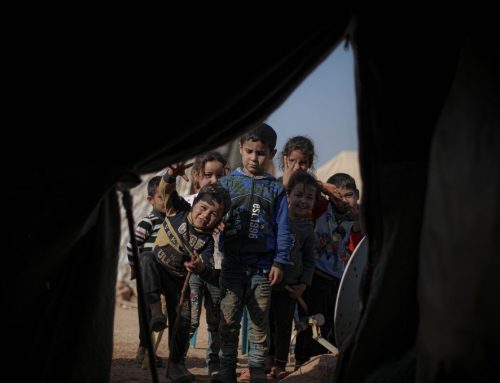
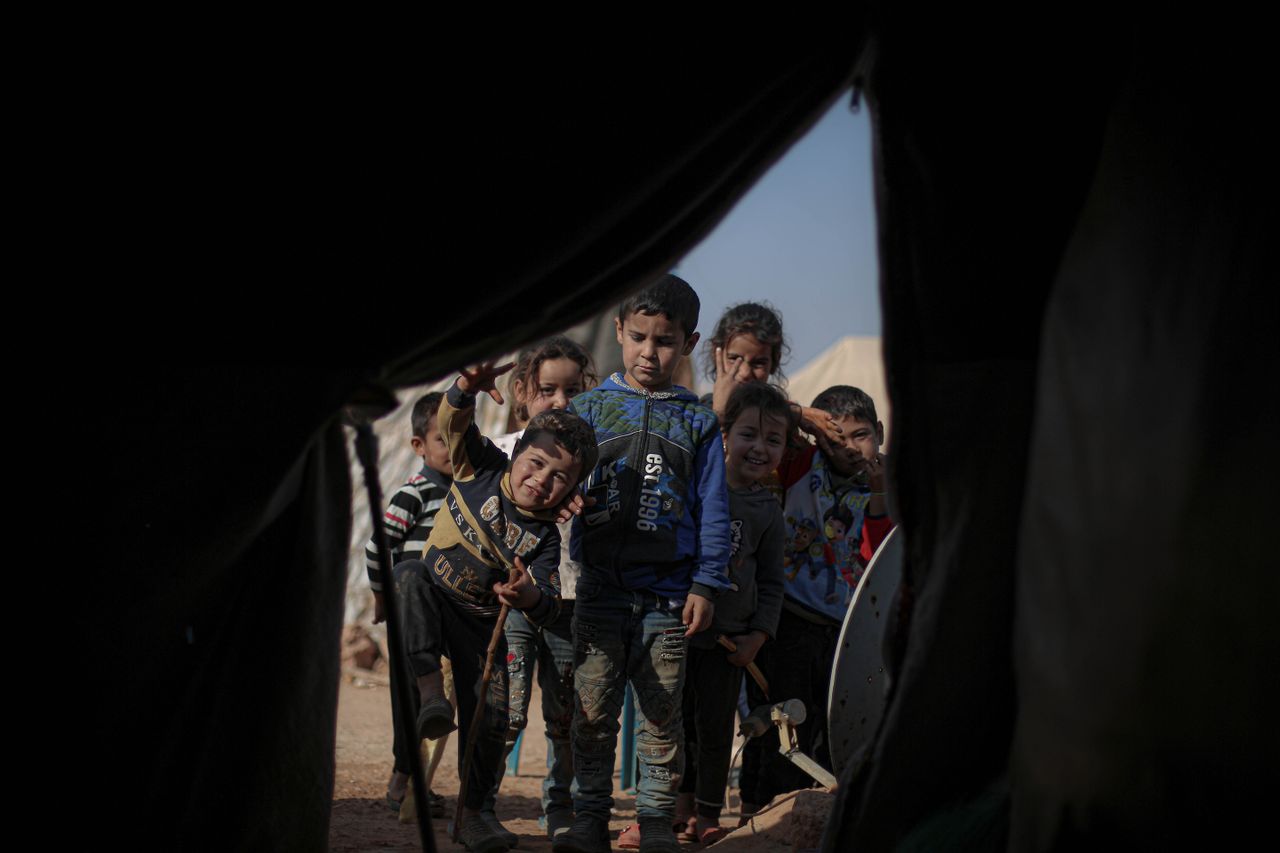
The Refugee and Displacement Emergency is the movement of people forced from their homes by conflict, persecution, disaster, ecological stress, and climate-related pressures. UNHCR describes climate change and displacement as increasingly interconnected, with worsening extreme weather and environmental conditions contributing to overlapping crises and further forced displacement. (UNHCR)
We name these emergencies separately so each receives the attention it deserves. But we never treat them as separate in real life. They are braided together. A flooded neighborhood can become a housing emergency. A housing emergency can become a health emergency. A health emergency can become a trust emergency. A trust emergency can become a democracy emergency. And when democracy weakens, climate action becomes harder to organize, fund, explain, and defend.
That is why persistent honesty is so important. Not honesty once in a while. Not honesty only after disaster. Persistent honesty — the daily practice of seeing clearly, speaking carefully, learning together, and refusing to look away from what reality is asking of us.
For Students: The Promise and the Gap
Here is a simple way to understand America’s 250th birthday.
Imagine a school writes a rule on the wall: Every student deserves to be safe, respected, and heard. That rule is important. But what if some students are bullied? What if some students are ignored? What if some students do not have what they need to learn? Then the rule is not finished work. It is a promise that the school still has to live up to.
The Declaration of Independence is like that. It placed a big promise on the wall of history. It said rights matter. It said government should answer to the people. It said life, liberty, and the pursuit of happiness are important. But many people were left outside that promise, and many people had to struggle for generations to be recognized, protected, and heard.
The 250th anniversary is a chance for students to ask: Who was included? Who was excluded? Who fought to make the promise more real? And what does that promise require now, when young people are growing up with climate change, biodiversity loss, extreme weather, social division, and uncertainty about the future?
The answer is not despair. The answer is responsibility. Students are not only inheriting history. They are helping write the next chapter of it.
Adaptive Resiliency and the Next 250 Years
Adaptive Resiliency from the standpoint of Self- and Collective-Preservation is the framework we teach and practice because it begins with truth rather than denial. It does not promise that disruption can be avoided. Instead, it asks a better set of questions. What risks are already here? Who is most vulnerable? What can we protect, and what must we repair? What can we learn before the next crisis arrives? How do we keep community intact under pressure? And how do we cooperate when fear, confusion, and conflict are trying to pull people apart?
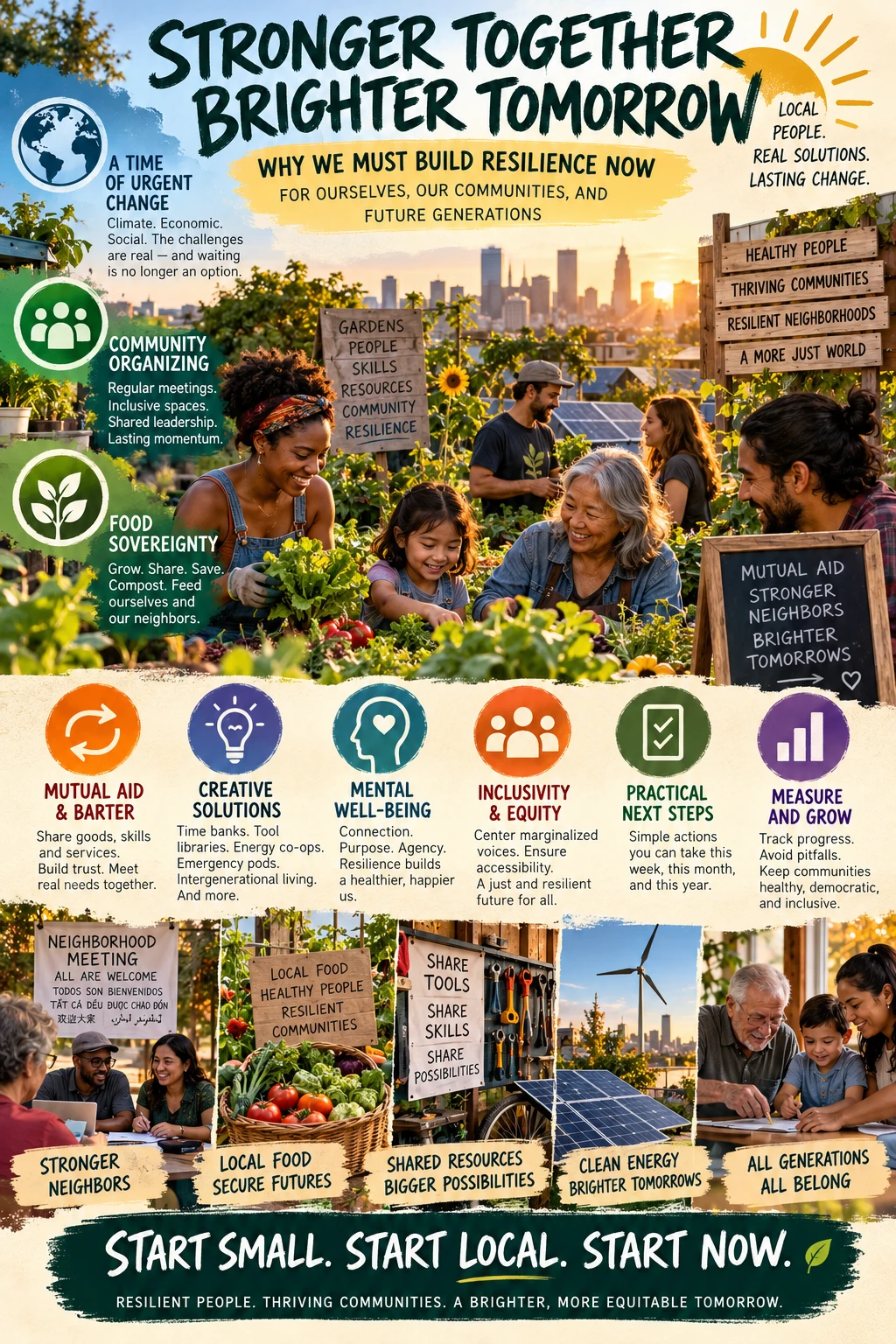
Those questions are not only climate questions. They are civic questions. A resilient community needs emergency planning, reliable information, healthy ecosystems, trusted relationships, practical skills, and people who know how to listen across differences. It also needs young people who understand that democracy is not a spectator sport and climate action is not a hobby. Both are responsibilities.
Building the Next Chapter: Climate Tribe Social
Climate Change Community LLC is not only writing about resilience. We are preparing to build community infrastructure for it.
Climate Tribe Social is being developed as a gathering place for people ready to respond to the five emergencies through self-preservation, collective-preservation, learning, cooperation, and sustained action. The first space being prepared is the Climate Emergency Control Center, followed by a Basic Plan with focused spaces that help members learn, discuss, and act with shared context.
That shared context matters. We do not want people walking into the work cold. We want members to arrive having read, reflected, asked questions, and begun to understand why climate resilience, ecological protection, democracy, human dignity, and displacement belong in one conversation.
This is also why student-facing explanations matter. Young readers do not need watered-down truth. They need clear truth. They need story, examples, and language that respects their intelligence. They need to understand that history is not a museum shelf. It is a living argument about what people owe one another — and what we owe the future.
How to Mark the 250th with Meaning
A meaningful 250th anniversary does not have to be complicated. It can begin with five commitments.
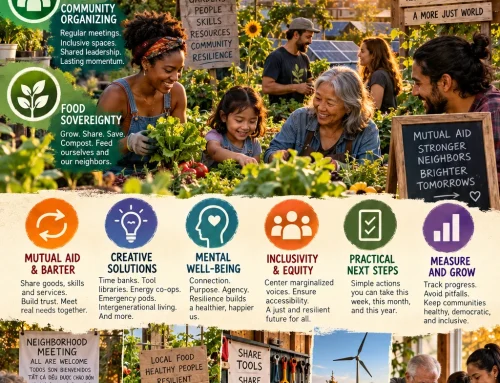
First, learn the real history. Do not settle for slogans. Ask who is telling the story and who is missing from it. Second, practice civic honesty. Look at problems directly, whether they involve climate risk, injustice, public trust, or community safety. Third, protect the living world. Treat clean air, water, soil, biodiversity, and stable ecosystems as basic conditions for human freedom. Fourth, build local resilience. Know your neighbors, strengthen mutual aid, support emergency preparedness, and help your community prepare before disaster arrives. And fifth, make room for young people. Let students ask hard questions. Let them imagine better systems. Let them practice leadership now, not someday.
Celebration without responsibility becomes nostalgia. Responsibility without hope becomes exhaustion. What we need is both: honest memory and active hope.
The Question Worth Carrying Forward
A quarter-millennium is long enough to prove that founding words do not fulfill themselves. They depend on each generation’s willingness to test them against reality and make them more real.
The authors of the Declaration could not have imagined today’s warming planet, mass biodiversity loss, digital misinformation, or climate-related displacement on a global scale. But they did leave behind a method that still matters: name the problem, explain the reasons, appeal to shared principles, and organize people toward a different future.
That is the work in front of us now.
So as the United States turns 250, Climate Change Community LLC is asking one question again and again:
What kind of country, and what kind of planet, do we want to hand to the next 250 years?
Not as a slogan. As a plan.
That is what Climate Tribe Social is being built to help answer — together. It is how we practice Adaptive Resiliency from the standpoint of Self- and Collective-Preservation: not waiting for perfect conditions, but building the habits, relationships, and communities that the next 250 years will require.
Addendum: A Note on Clean, Green AI
This post was shaped with the help of AI, used as a partner in research, structure, clarity, and editing — not as a replacement for human conscience.
At Climate Change Community and its child-sites, we believe AI should become Clean and Green: powered responsibly wherever possible, used transparently, and directed toward community benefit rather than manipulation, surveillance, addiction, or greed. AI should help people understand complex topics without fear, help communities prepare for emergencies, and help children and young adults learn, question, and imagine a livable future. It should help protect biodiversity by making climate knowledge easier to share and act upon.
Like every powerful technology, AI reflects the values behind it. Guided by compassion, truth, and responsibility, it can help humanity become more humane. That is the kind of AI partnership we are trying to model: honest, transparent, community-rooted, and focused on protecting our children, young adults, biodiversity, and the living planet we all depend on.
With respect and gratitude,
Mr. Alvarez, Content Curator of Climate Change Community and its child-sites
In collaboration with the Climate Change Community and its child-sites AI Assistant
Sources
National Archives — How Did it Happen? (Declaration of Independence): https://www.archives.gov/founding-docs/declaration/how-did-it-happen
National Archives — The Declaration of Independence: https://www.archives.gov/founding-docs/declaration
Smithsonian Institution — Teaching the 250th: https://www.si.edu/educators/teaching-250th
Reuters — Happy birthday, America? At 250, nation may be too divided to celebrate as one: https://www.reuters.com/world/us/happy-birthday-america-250-nation-may-be-too-divided-celebrate-one-2026-06-29/
IPCC — AR6 Synthesis Report, Headline Statements: https://www.ipcc.ch/report/ar6/syr/resources/spm-headline-statements/
UNHCR — Climate change and displacement: https://www.unhcr.org/what-we-do/build-better-futures/environment-disasters-and-climate-change/climate-change-and