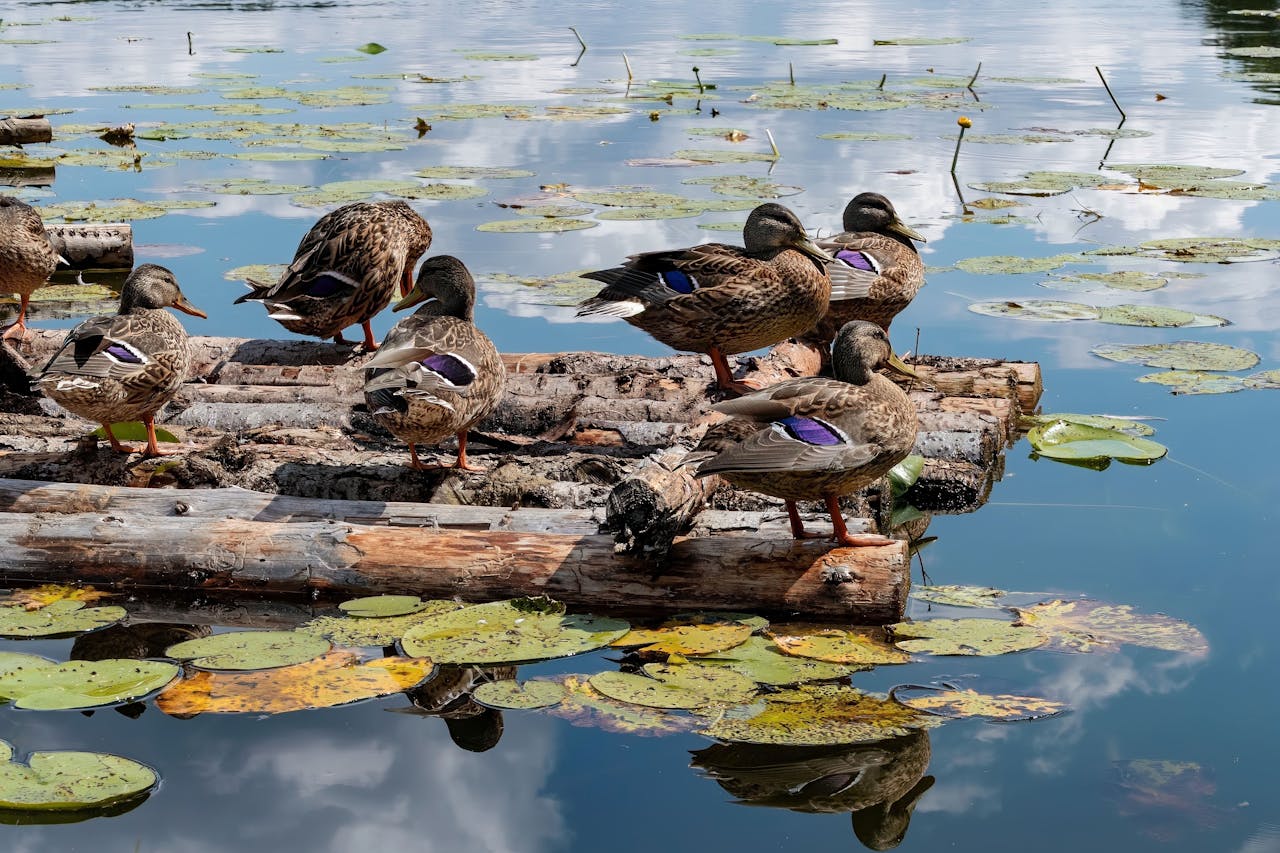
She was born when the air was crisp and clean, when mornings felt like a blessing and not a warning. The pond of her childhood was clear enough to reveal darting crayfish below the surface and reeds swaying in water that still knew how to hold life gently. In those early years, Sally—let us call her Sally—knew abundance. She knew siblings splashing beside her, insects plentiful at the waterline, and the soft choreography of a healthy wetland: dragonflies hovering, fish gliding, frogs calling from the edges. She also knew caution. The elders had taught her that the towering creatures called humans could be kind, but they could also be cruel.
Some humans came with children and scattered bits of bread, laughing softly as ducks and swans approached. Others came with beasts on leashes, with engines, with litter, with hooks, with hunger, with indifference. Sally learned quickly that humanity contained both tenderness and violence. In the world of birds, difference was not a reason for hatred. Pelicans, swans, ducks, and wading birds shared space, seasons, and survival. But the human world seemed split in two: those who cared, and those who did not.
She first sensed the change around 1983. Not all at once. That is the way decline often comes—not as a single catastrophe, but as a slow theft. The pond clouded. Strange slicks appeared after rain. Fewer crayfish could be seen. Some mornings carried a smell that did not belong to mud, reeds, or life. Sally was still young, but even she could tell that something sacred had been disturbed.
When she flew south for winter, the journey became harder. Resting waters that had once welcomed migrating birds had turned suspect. Some ponds were choked with algae. Others were edged with trash, oil sheen, or runoff from roads, farms, and developments. The places that should have restored migrating bodies were now hazards. She would arrive in North Florida and hear stories from other birds: marshes filled in, wetlands drained, shorelines hardened, waters tainted, food reduced, heat rising.
And the heat—she noticed that too. Waters that had once cooled tired wings now felt unnaturally warm. The shallow ponds and stopover lakes held less oxygen, more slime, more stress. Sally did not know the phrases humans use—climate change, eutrophication, toxic runoff, regulatory rollback, ecological overshoot—but she knew what it meant when home stopped behaving like home.
That is the tragedy at the center of this story. Sally is fictional in name, but not in truth. Around the world, the waters that sustain ducks, swans, fish, amphibians, insects, and people are being poisoned, overheated, overdrawn, and neglected. This is not only an environmental problem. It is a moral one.
Water connects everything. A pond is not just a pond. It is a nursery, a refuge, a filter, a mirror, a migration station, and often the first chapter in a much larger hydrological story. What happens to a neighborhood pond is connected to what happens in creeks, then rivers, then estuaries, then seas, and finally the open ocean. Pollution travels. Heat travels. Neglect travels. And, eventually, consequences travel back to us.
The numbers behind this crisis are staggering. The United Nations Environment Programme says that every year 19 to 23 million tonnes of plastic waste leak into aquatic ecosystems, polluting lakes, rivers, and seas. UNEP also warns that plastic pollution entering aquatic ecosystems could nearly triple by 2040 without meaningful action. Plastic does not simply disappear; it fragments, persists, enters food webs, entangles wildlife, and moves through freshwater and marine environments for years or centuries. Source
Plastic is only part of the story. UNEP has also warned that over 80 percent of the world’s wastewater is released into the environment without treatment, contaminating fields, lakes, and rivers and affecting drinking water sources for hundreds of millions of people. Wastewater carries pathogens, nutrients, chemicals, and industrial residues. It turns living water into a delivery system for disease and ecological decline. Source
In human terms, the crisis is just as severe. The World Health Organization reports that in 2022, 2.2 billion people lacked safely managed drinking-water services. Among them, 115 million people were still collecting untreated surface water from lakes, ponds, rivers, and streams. WHO also notes that unsafe drinking water, sanitation, and hygiene contribute to around 1 million deaths each year from diarrhoea alone. When we allow watersheds to degrade, we are not only failing wildlife like Sally; we are failing children, communities, and public health on a massive scale. Source
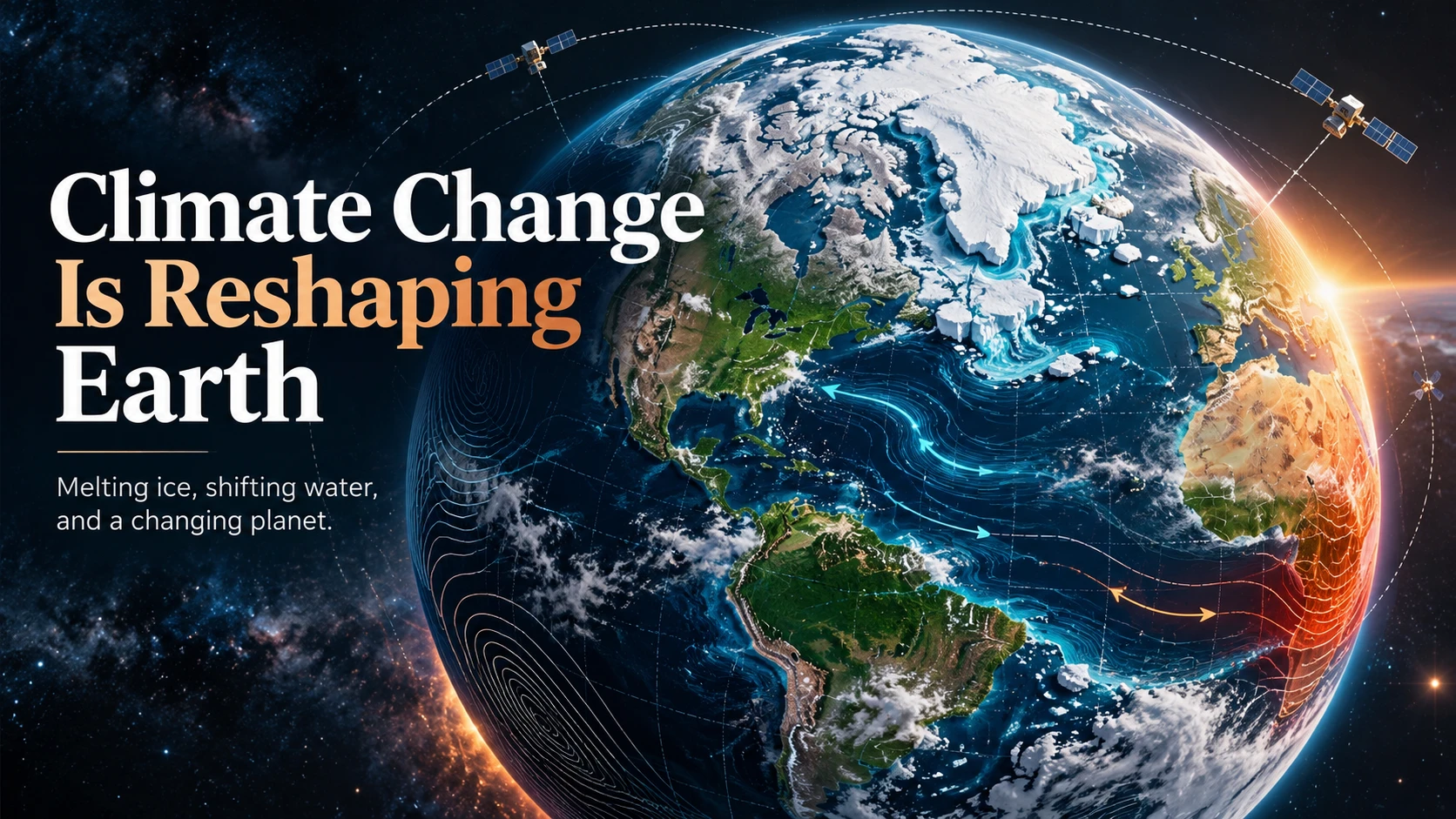
Climate change is intensifying every part of this crisis. The IPCC concludes with high confidence that climate change, land-use change, and pollution are major drivers of freshwater ecosystem degradation. Warmer temperatures, altered rainfall, more extreme floods, and deeper droughts are reducing water quality, worsening water insecurity, and increasing the spread of water-related disease. At higher levels of warming, the risks multiply: more places swing between flood and low-flow extremes, more sediment and pollutants wash into reservoirs, and more communities lose reliable access to acceptable-quality water. Source
That warming is not abstract. The ocean is absorbing enormous amounts of heat. NOAA states that between 1993 and 2022, the heat absorbed by the ocean was more than 800 times the total electricity consumed by the United States in 2022. Warmer oceans contribute to rising seas, stronger storms, coral bleaching, shifting fisheries, and more marine heatwaves. When water warms beyond what ecosystems evolved to handle, whole food webs begin to strain. Source
NOAA also explains that marine heatwaves—periods when ocean temperatures exceed the 90th percentile for at least five days—can last weeks, months, or even years. These events have already been linked to ecosystem disruption, fishery collapse, and coral death. What is happening in the ocean mirrors what Sally sensed in ponds and shallow wetlands: water is becoming less stable, less hospitable, and more dangerous for life. Source
Freshwater systems are warming too, and when warmth combines with nutrient pollution, the result is often toxic. The U.S. Environmental Protection Agency explains that excess nitrogen and phosphorus fuel algal blooms, which block sunlight and consume oxygen as they decay. The result can be dead zones where aquatic life cannot survive. EPA notes that the largest dead zone in the United States, in the Gulf, is about 6,500 square miles in summer and is driven largely by nutrient pollution flowing from the Mississippi River Basin. Source
These blooms do not just kill fish. They also threaten birds, pets, livestock, and people. EPA says harmful algal blooms can occur in lakes, reservoirs, rivers, ponds, bays, and coastal waters, and the toxins they release can contaminate drinking water and harm both humans and animals. Source
Climate change makes this worse. EPA states that harmful cyanobacterial blooms thrive in warm, slow-moving water, and that increasing temperatures, more intense rainfall, drought, salinity shifts, and rising carbon dioxide levels can all increase the magnitude, duration, and frequency of harmful algal blooms. In other words, pollution and warming are no longer separate crises. They are feeding each other. Source
This matters deeply for birds like Sally. Waterfowl live by timing, habitat quality, and access to safe stopovers. Change the water, and you change everything. The U.S. Fish & Wildlife Service has documented how warming northern temperatures are altering duck migration. Scientists cited in that report note that the southern extent of mallards’ wintering range has shifted hundreds of miles north, and that many duck species now spend more time farther north because winters no longer become severe enough to force them south. Ponds that used to freeze later, wetlands that used to stay cold, and food sources that used to disappear now behave differently. Migration itself is being rewritten. Source
The consequences can be devastating when habitat loss and water scarcity combine. Audubon reports that the Klamath Basin—one of the most important waterfowl stopovers in North America—once supported millions of birds. In 1958, waterfowl numbers there peaked at 5.8 million. More recently, peak estimates have collapsed to around 93,000, the lowest ever recorded. Audubon says an estimated 80 percent of the waterfowl traveling the Pacific Flyway rely on Klamath Basin refuges as stopover sites, yet drought, wetland loss, and water policy failures have left some refuges nearly dry. Source
That is what ecological emergency looks like. Not just a graph. Not just a policy paper. A sky that should be filled with wings, now empty.
And if all this still feels remote to some readers, it should not. The same forces harming migratory birds are threatening the water humans drink. EPA’s Source Water Protection Program makes this plain: climate change can reduce water supply through drought, increase wildfire risk, degrade water quality through stormwater runoff carrying pollutants, and raise water temperatures in ways that increase harmful algal blooms. Source water includes rivers, streams, lakes, reservoirs, springs, and groundwater—the very systems many communities depend on before water ever reaches a treatment plant. Source
That means the climate and ecological emergencies are not only “out there” in remote wilderness. They are in the reservoir behind town. They are in the river feeding a treatment plant. They are in the runoff after a storm, the sediment after a wildfire, the bloom at the edge of a lake, the plastic fragments in a storm drain, the PFAS in a community’s tap water. They are in the daily infrastructure of life.
And this brings us to policy—because decline is not just accidental. Some of it is chosen.
In the United States, the current administration has pursued a sweeping deregulatory agenda that critics argue weakens oversight and accountability for polluters. In March 2025, EPA Administrator Lee Zeldin announced 31 historic actions in what the agency itself described as the “greatest and most consequential day of deregulation” in EPA history. Among those actions were reconsideration of wastewater limits for power plants, reconsideration of wastewater regulations for oil and gas development, redirection of enforcement resources, and revision of multiple pollution-related rules. Source
The administration has also moved to narrow which waters qualify for federal protection under the Clean Water Act. EPA announced it would revise the definition of “waters of the United States” in line with a narrower interpretation, emphasizing relatively permanent waters and wetlands with a continuous surface connection. Reuters reported that environmental groups warned this narrowing could harm wetlands and reduce protection from pollution in waters previously covered under broader interpretations. Source Source
At the same time, EPA announced it would reconsider 2024 wastewater limits for coal-burning power plants—rules aimed at controlling pollutants and thermal pollution from facilities whose discharges can include hazardous contaminants. The agency framed this as relief for industry and electricity costs, but the move clearly signals a willingness to weaken or delay pollution safeguards in the name of deregulation. Source
The Associated Press similarly described the 2025 EPA actions as a broad deregulatory package affecting landmark clean air and water rules, including wastewater standards for power plants, coal ash oversight, and chemical facility safeguards. AP noted that some of these rules were originally designed to limit pollutants such as mercury, arsenic, lead, and other hazardous contaminants. Source
Drinking-water protections have also come under pressure. Earthjustice reported in 2025 that EPA planned to revoke or delay parts of the landmark 2024 PFAS drinking-water standards, including rolling back standards for several “forever chemicals” and delaying limits for PFOA and PFOS until 2031. Earthjustice warned that this could weaken protections for up to 105 million people whose drinking water exceeds the 2024 standards. Whether one views the issue through the lens of public health, regulatory certainty, or environmental justice, it is difficult to argue that delaying toxic water protections strengthens accountability. Source
To be fair, administrations always argue that deregulation reduces burdens, lowers costs, and clarifies authority. But we should ask a harder question: lower costs for whom, and paid by whom? When wetlands lose protection, downstream communities pay. When wastewater rules are weakened, rivers pay. When toxic standards are delayed, families pay. When enforcement is softened, companies save money and ecosystems absorb the debt. Sally pays. So do we.
This is the heart of the matter: pollution is not merely waste misplaced. It is harm displaced. It is cost shifted from balance sheets onto marshes, fish, birds, children, and future generations. It is the conversion of the commons into sacrifice zones.
Still, this story does not have to end in despair. Sally had noticed something important in the user’s original vision of her life: some humans did care. Some cleaned ponds. Some restored habitat. Some wore green emblems, planted native vegetation, protected wetlands, reduced runoff, fought for clean energy, monitored water quality, and spoke when others stayed silent. That is not sentimentalism. It is strategy.
We know many of the solutions. Protect wetlands because they filter water, store floodwaters, recharge aquifers, and shelter wildlife. Reduce nutrient pollution from agriculture and urban runoff. Upgrade wastewater treatment. Cut plastic use at the source. Regulate toxic chemicals before they spread. Defend science-based drinking-water standards. Preserve migratory habitat corridors. Restore riverside vegetation. Move faster on clean energy so the warming of ponds, lakes, estuaries, and oceans does not continue unchecked.
We also need a change in culture. We must stop thinking of nature as scenery and start understanding it as infrastructure—living infrastructure, irreplaceable infrastructure. A marsh is not empty land waiting for development. A pond is not a disposable depression in the landscape. A river is not a conveyor belt for waste. The ocean is not too big to poison. Every water body is a relationship.
Sally hoped for the best but planned for the worst. That line stays with me because it feels like a description of the age we are living in. Wildlife is adapting where it can, shifting ranges, changing migration timing, squeezing into degraded habitat, surviving on the margins humans leave behind. But adaptation has limits. A duck cannot legislate. A wetland cannot hire a lawyer. A river cannot vote. That leaves the burden with us.
So let this short tale of a female duck become what it was always meant to be: a mirror.
If Sally’s pond is warmer, what have we heated?
If her resting places are toxic, what have we normalized?
If migratory skies are emptier, what have we stolen?
If our reservoirs are threatened too, what exactly are we waiting for?
The story of the forlorn good duck is not just about one bird. It is about the unraveling of trust between life and the systems that sustain it. It is about the grief of watching what should nurture become what harms. And it is about the choice, still before us, to stop making the world more hostile to the innocent lives moving through it.
For Sally. For the swans and pelicans. For the fish below the surface. For children yet to stand beside a clear pond and feel wonder instead of warning. For communities that need safe drinking water. For a future in which migration is still possible and clean water is still treated as sacred.
Please visit ClimateChangeCOmmunity.com and cCcmty.com and read the blog posts there.
If you want, I can also turn this into a more polished publication-ready blog version with a stronger headline, subtitle, SEO-friendly subheads, and a shorter social-media teaser.
———————————————
Addendum: Experience, simple but impactful…
I have always loved snakes—garter snakes, milk snakes, and other gentle species that most people never take the time to truly know. Growing up in upstate New York, I found a tiny garter snake in the woods near my home. He was just a baby. I imagined he had somehow lost his mother, or at least had become separated from whatever fragile beginning nature had given him. I cared for him deeply. He would rest with me, wrap around my fingers and hands, and move with a calm trust that felt almost miraculous. He seemed to know safety. He seemed to know affection. To me, he was not a “creature” in some distant sense. He was a life, a presence, a relationship.
About fifty years later, not far from where I had once found that little snake, I found another—this one a newborn garter snake, impossibly small. I picked it up immediately and could feel something was wrong. It was in distress. It died of dehydration right there in my hands. I cried. I cried because it was not just one tiny snake. It was a message. It was a glimpse into what countless animals are now enduring because of the world we humans have built for our convenience, our speed, our waste, and our luxury.
That moment stayed with me because it connected memory to reality. The woods were not what they had been. The moisture was not what it had been. The smallness of life felt more exposed. And it was not only the snake. I noticed fewer insects, fewer fireflies, fewer dragonflies, less of that buzzing, shimmering abundance that once made warm evenings feel alive. Science backs up what so many people have quietly noticed. Pollinators and other insects are under pressure from habitat loss, pesticides, pollution, and climate change, and animals pollinate roughly 87.5% of flowering plants worldwide. Fireflies in particular depend on moist habitats such as wetlands, streams, and damp fields, and conservation groups warn that habitat degradation, poor water quality, drought, pesticide use, and light pollution are among the reasons many firefly populations are struggling. (FAOHome)
What happened in my hands was personal, but the crisis is planetary. Freshwater ecosystems are among the most damaged on Earth. The 2024 Living Planet Report found that monitored wildlife populations globally have fallen by an average of 73% since 1970, and freshwater populations have been hit even harder, with some reporting around an 85% collapse in monitored freshwater wildlife. Wetlands, which function as nurseries, filters, buffers, and homes for innumerable species, have also vanished at frightening speed; reporting this year highlighted that roughly a third of the world’s wetlands have been lost since 1970. (WWF Panda)
This matters for everything that lives. Snakes need prey, cover, moisture, and functioning food webs. Birds need wetlands, shallow waters, fish, amphibians, insects, and safe migratory stopovers. Mammals from elephants to rhinos to giraffes need water sources that do not disappear or turn toxic. Amphibians, which are already among the most threatened vertebrates, are extraordinarily vulnerable to polluted and warming water. Even the insects many people overlook are part of the architecture of life. When they decline, birds lose food. Reptiles lose prey. Plants lose pollinators. Entire ecological relationships begin to fray.
Water is the essential element in all of this, and it is being stressed from every direction at once. Globally, 2.2 billion people still live without safely managed drinking water, and 122 million people relied on untreated surface water in 2022. At the same time, the world is still releasing enormous volumes of inadequately treated wastewater into nature. UN-Water reported that in 2022, 42% of household wastewater was not safely treated before discharge, amounting to an estimated 113 billion cubic meters released with inadequate or no treatment. When that pollution reaches rivers, lakes, estuaries, and coasts, it does not only harm fish or birds “out there.” It moves through watersheds, food systems, and communities. (UN-Water)
Climate change is making the damage worse. The World Meteorological Organization reported that 2025 was among the hottest years ever observed, and its 2026 climate reporting says 2015–2025 were the hottest eleven-year stretch on record. NOAA likewise reported record-high upper ocean heat content in 2025. Warmer oceans intensify storms, disrupt marine food webs, bleach corals, and reduce oxygen available to marine life. Warmer lakes and reservoirs also worsen harmful algal blooms, which can poison pets, livestock, wildlife, and people while driving up drinking-water treatment costs. The EPA states plainly that climate change can lead to more intense harmful algal blooms, and that these blooms threaten human health, aquatic ecosystems, and drinking water supplies. (World Meteorological Organization)
The warming of water is not theoretical anymore. It is already reshaping water availability. The WMO’s State of Global Water Resources 2024 described a year marked by record heat, drought, floods, and severe water-related impacts, with global surface temperatures reaching about 1.55°C above pre-industrial levels in 2024. UNESCO and WMO have also emphasized that glaciers and snowmelt provide freshwater to more than 2 billion people worldwide. Yet those “water towers” are shrinking. Here in the United States, federal water and climate updates released just days ago said mountain snowpack at the end of March remained well below normal in much of the West, with record to near-record lows in some places. That is not just a problem for scenery. It is a problem for rivers, reservoirs, farms, fish, forests, drinking water systems, and every species that times its survival to the slow release of snowmelt. (World Meteorological Organization)
As water grows less reliable, displacement grows. UNICEF warns that four billion people experience severe water scarcity for at least one month each year, and some 700 million people could be displaced by intense water scarcity by 2030. The Internal Displacement Monitoring Centre reported that 83.4 million people were living in internal displacement at the end of 2024, the highest total ever recorded, and that the United States alone registered 11 million disaster-related movements in 2024. Displacement is often discussed as a human issue only, but wildlife are displaced too—forced from wetlands, grasslands, forests, rivers, coasts, and mountain habitats by drought, flood, fire, heat, and contamination. Some move. Some starve. Some simply vanish before anyone has counted them. (UNICEF)
This is where policy becomes moral. In the United States, the current administration has taken at least one notable recent step by moving to monitor microplastics and pharmaceuticals in drinking water, which is important. But that does not erase the broader pattern. Reuters reported in February 2026 that federal civil enforcement actions against polluters dropped to a record low in 2025, citing a 76% decline from the first year of the Biden administration. Meanwhile, EPA and the Army Corps proposed a revised “waters of the United States” rule in late 2025 that would narrow which waters receive federal Clean Water Act protection, and EPA has also reconsidered parts of the PFAS drinking-water framework even while leaving the PFOA and PFOS standards in place. So it is accurate to say that oversight has not disappeared entirely, but it has been weakened, narrowed, or made less forceful in key areas just as water stress and pollution risks are intensifying. (Reuters)
That is why the image of a baby garter snake dying of dehydration matters. It is not sentimental excess. It is evidence. It is a witness. It tells us that ecological breakdown is not only happening in distant oceans, melting poles, or headline disasters. It is happening on neighborhood walks, in familiar woods, in creeks children once played beside, and in the quiet disappearance of species we used to think would always be there.
We should not have to wait until every reservoir is strained, every summer is smoke-filled, every wetland is choked, and every child grows up thinking dragonflies and fireflies belong mostly to stories. Clean water is not optional for any life-form on this planet. Neither is a livable climate. The Climate and Ecological Emergencies are converging in our waters now—ponds, streams, rivers, lakes, reservoirs, seas, and oceans alike. For humans and for wildlife, this is no longer a warning about the future. It is the shape of the present. (U.S. Geological Survey)
If you want, I can now merge this addendum directly into the Sally post and turn both pieces into one seamless long-form blog article.
(My thoughts, GenSpark Enhanced…)