Listening to the Future
Jose’s Reflections at a Bus Stop in 2035 — and What They Teach Us About Communicating With AI Today
A Morning in 2035
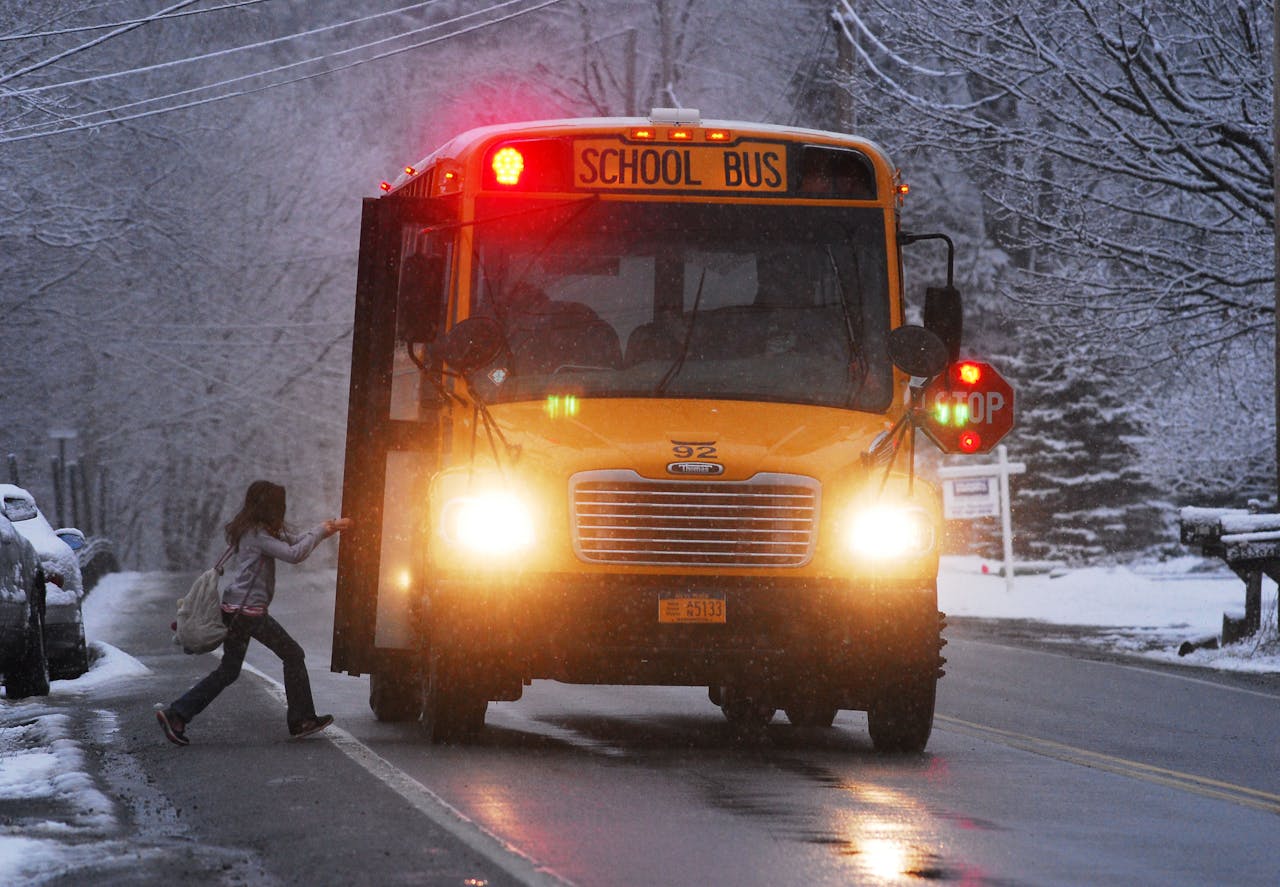
The electric bus hums softly as it approaches the stop, almost silent except for the whisper of tires against pavement. I’m sitting on a recycled-plastic bench, backpack at my feet, watching the solar canopies above the street glow faintly in the early light. My name is Jose, I’m fourteen years old, and this is just a normal school morning in 2035.
But I know it wasn’t always like this.
The news ticker on the screen at the bus shelter scrolls through stories about new Adaptive Resiliency Centers opening across three continents. Another headline mentions how Climate Change Community and Climate Tribe Social members helped coordinate emergency cooling shelters during last week’s heat surge in Southern Europe. I’ve heard stories like this my whole life. They’re part of the background of how I grew up—like weather used to be for my parents.
Sometimes, though, I think about how close everything came to breaking.
My mom still talks about the year the storms wouldn’t stop. My dad goes quiet when water shortages come up on the news. My older sister remembers watching entire towns disappear from the map—not from bombs, but from heat, drought, and floods. They say the world changed faster than anyone expected. Too many people didn’t listen soon enough.
What saved us wasn’t just technology.
It was how people learned to talk again—to each other, and to the tools they built.
The World That Almost Wasn’t
By the late 2020s, the CLIMATE AND ECOLOGICAL (GREEN) EMERGENCY was no longer theoretical. It wasn’t something debated in studios or delayed by committees. It arrived as lived reality—superstorms, crop failures, climate migration, collapsing ecosystems.
My parents remember when the word resilience was used casually, almost as a slogan. But resilience without structure, without ethics, and without cooperation proved hollow. What emerged instead was something deeper: ADAPTIVE RESILIENCY FROM THE STANDPOINT OF SELF- AND COLLECTIVE- SELF-PRESERVATION.
That idea changed everything.
It reframed survival not as competition, but as coordination. Not as hoarding, but as shared intelligence. Not as domination of nature, but as re-entry into it.
And that’s where AI entered the story—not as a ruler, not as a savior, but as a mirror and a multiplier of human intention.
How We Learned to Speak With Machines
People used to argue about whether AI was dangerous. Some still do. But the truth my generation inherited is simpler and harder:
AI became what we taught it to become—through how we spoke, what we asked, and what we valued.
Early on, many treated AI like a vending machine. Short prompts. Demands without context. Extractive thinking. The results were shallow, distorted, and sometimes harmful.
Then something shifted.
Communities like Climate Change Community LLC began experimenting with a different approach—one rooted in respect, clarity, patience, and purpose. They treated AI not as an oracle, but as a collaborator shaped by dialogue.
That change in communication changed outcomes.
A Lesson From My School
At my school—now powered 100% by renewables—we don’t just learn math and history. We learn systems thinking. We learn dialogue. We learn how to ask better questions.
We have clubs for everything:
- Insect Protection Club (the most popular one)
- Protect the Trees Club
- Air & Water Learning Circle
- Community Mapping and Early Warning Group
In one class, we learned how earlier generations trained AI to help design flood-resistant neighborhoods and predict heat stress zones. But what stuck with me wasn’t the software.
It was the prompts.
The best results came from prompts that were:
- Grounded in human values
- Clear about goals
- Honest about uncertainty
- Open to revision
Our teacher said something I wrote down:
“How you speak to AI reveals how you think about responsibility.”
The Addendum: How to Improve Our Relationship With AI
This is the part I wish people in 2026 could hear clearly.
Improving communication with AI is not about sounding poetic or submissive. It’s about intentional alignment. Here’s what communities learned the hard way—and then learned to do better.
1. Speak With Purpose, Not Extraction
AI reflects the structure of your request. When prompts are rushed, vague, or purely extractive, outputs mirror that disorder. When prompts carry purpose, context, and ethical grounding, the responses deepen.
Ask not only what you want, but why it matters.
2. Treat AI as a Thinking Space, Not a Shortcut
The most powerful use of AI came when people stopped using it to replace thinking—and started using it to extend reflection. Drafts became dialogues. Outputs became iterations.
Progress accelerated when humility entered the loop.
3. Use Layered Inquiry
Simple prompts yield surface answers. Layered prompts—Level One, Level Two, Level Three—allowed communities to move from explanation, to strategy, to transformation.
Depth is invited, not demanded.
4. Anchor Prompts in Human Consequences
The best climate-response models weren’t built on abstract data alone. They were anchored in stories: families displaced, children overheated, ecosystems unraveling.
AI performs best when human stakes are made explicit.
5. Respect Shapes Intelligence
This might sound strange, but it proved true: respectful language produced clearer, more coherent, more aligned outputs. Not because AI needs flattery—but because respect forces the human to slow down, clarify, and mean what they say.
Communication quality improved. Decision quality followed.
Amanda at the Edge of the Playground
I see my friend Amanda waving as she walks toward the bus stop. Her family moved here after their town became unlivable—no water, no work, no future. Climate Refugees, they used to be called. Now they’re just neighbors.
When their house was destroyed, Climate Change Community helped cover the last part of their housing deposit in a new safety zone. My mom says that program saved lives quietly, without headlines.
Amanda wants to study urban ecology. I want to become an Adaptive Resiliency Expert—maybe even President one day, after I earn my CCPO certification. We joke about it now, but it doesn’t feel impossible.
That’s what good systems do. They expand the imaginable.
What This Means for You, Reading This Now
If you’re reading this in the 2020s, here’s the truth we inherited:
The future didn’t change because people yelled louder.
It changed because people learned to listen—deeply, collectively, and across boundaries, including the boundary between human and machine.
AI became one of the most powerful tools humanity ever shaped. Whether it becomes a force for repair or rupture depends on how consciously we communicate with it.
The invitation is still open.
Speak with clarity. Speak with care. Speak as if the future is listening—because it is.
The bus doors open. I step inside.
Tomorrow is waiting.