Think of the causes of global warming, and fossil fuel energy probably comes to mind. Less conspicuous are the consequences of breakfast, lunch, and dinner. The food system is elaborate and complex; its requirements and impacts are extraordinary. Fossil fuels power tractors, fishing vessels, transport, processing, chemicals, packaging materials, refrigeration, supermarkets, and kitchens. Chemical fertilizers atomize into the air, forming the powerful greenhouse gas nitrous oxide. Our passion for meat involves over 60 billion land animals that require nearly half of all agricultural land for food and pasture. Livestock emissions, including carbon dioxide, nitrous oxide, and methane, are responsible for an estimate 18 to 20 percent of greenhouse gases annually, a source second only to fossil fuels. If you add to livestock all other food-related emissions—from farming to deforestation to food waste—what we eat turns out to be the number one cause of global warming. This section profiles techniques, behaviors, and practices that can transform a source into a sink; instead of releasing carbon dioxide and other greenhouse gases into the atmosphere, food production can capture carbon as a means to increase fertility, soil health, water availability, yields, and ultimately nutrition and food security. – Section from book DRAWDOWN – THE MOST COMPREHENSIVE PLAN EVER PROPOSED TO REVERSE GLOBAL WARMING | EDITED BY PAUL HAWKEN
From Carbon on the Plate to Carbon in the Soil
Extending Drawdown’s Food Revolution into Community Resilience
The Climate Story Hidden in a Meal
When most people hear the words global warming, they picture smokestacks, tailpipes, oil rigs, coal plants, and gas pipelines. That picture is accurate, but incomplete. Climate change is also present in the ordinary rhythm of eating: the eggs in the pan, the cereal in the bowl, the sandwich at lunch, the refrigerated leftovers that may or may not get used before they spoil.
A meal is never just a meal. It is the endpoint of a vast chain of energy, land, water, labor, chemistry, transport, refrigeration, packaging, finance, policy, culture, and habit. Long before food reaches the plate, fossil fuels may have powered tractors, irrigation pumps, fishing vessels, fertilizer production, processing plants, delivery trucks, grocery stores, and home kitchens. Behind many foods are also land-use decisions: forests cleared, wetlands drained, soils exposed, feed crops planted, manure stored, and waste buried in landfills.
This is where the food section of Drawdown remains so important. It asks us to look at the climate crisis not only as an energy emergency, but as a living-systems emergency. Food is one of the clearest places where human survival, ecological damage, and practical solutions meet.
Food as a Source, Food as a Sink
Industrial food systems release greenhouse gases in several ways. Carbon dioxide comes from fossil fuel use and land clearing. Methane comes from ruminant digestion, manure, rice cultivation, and decomposing organic waste. Nitrous oxide, a particularly powerful greenhouse gas, is released when excess nitrogen fertilizer is applied to soils or mishandled in manure systems.
But food is not only a source of emissions. Managed differently, farms, forests, wetlands, grasslands, compost systems, and urban gardens can become part of the climate solution. Healthy soils can store carbon. Perennial crops can protect land from erosion. Diverse farms can hold more water. Compost can return organic matter to the ground instead of sending food scraps to methane-producing landfills. Agroforestry can combine food, shade, habitat, and carbon storage. Better nutrient management can reduce pollution while saving farmers money. Plant-rich diets can reduce pressure on land and cut methane from high-emitting animal systems.
That is the deeper message: the food system is not fixed. It is designed, subsidized, marketed, normalized, and repeated. What has been designed one way can be redesigned another way.
The Plate Is Personal, but the System Is Collective
Food choices can feel intimate. They are tied to family, culture, income, memory, religion, health, identity, convenience, and pleasure. For that reason, climate conversations about food must be handled with care. Shaming people for what they eat is not a serious strategy. Neither is pretending that individual shopping choices alone can repair a global system shaped by corporations, infrastructure, trade policy, agricultural subsidies, poverty, and food apartheid.
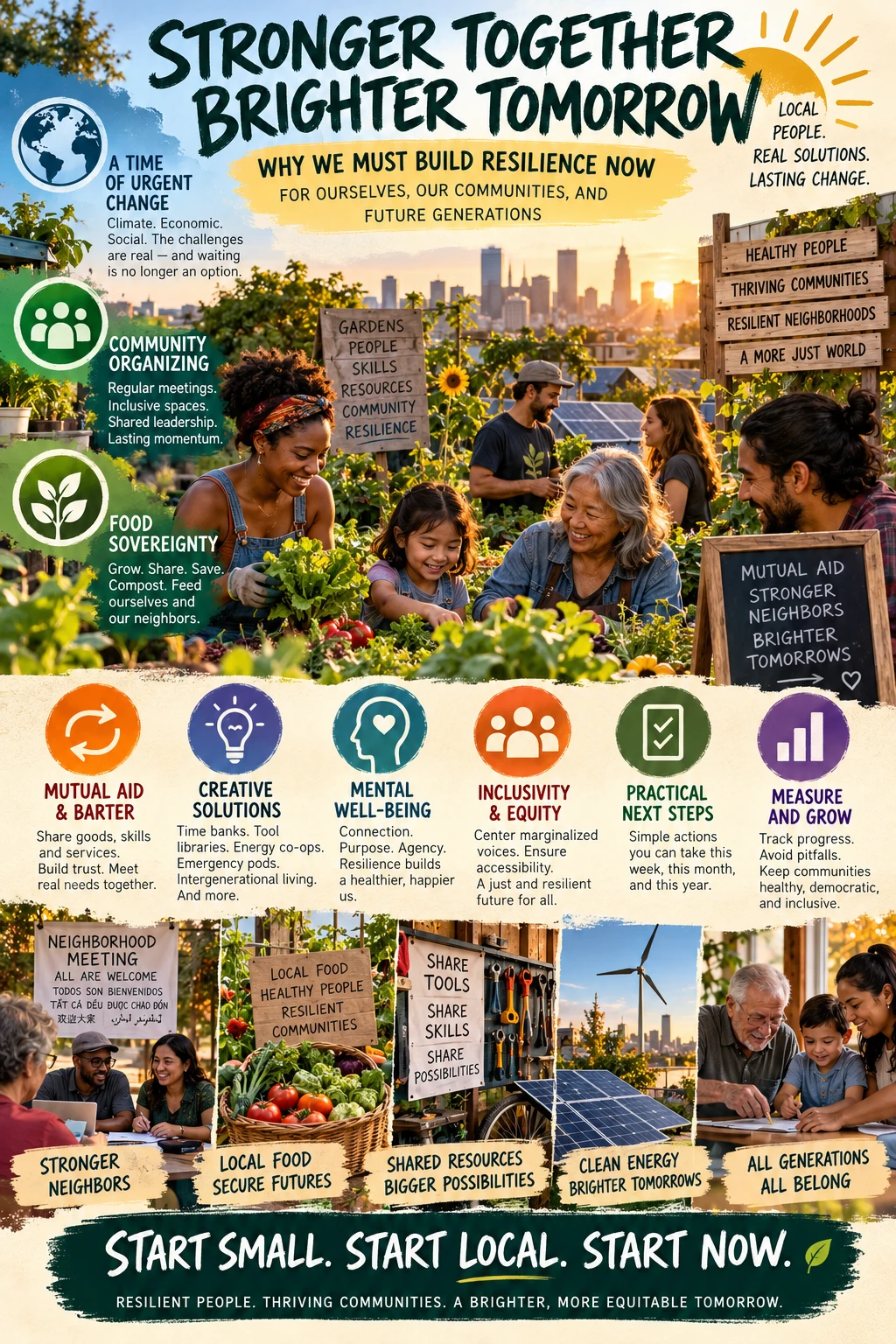
A resilient food strategy needs both personal and collective action. At the personal level, households can waste less food, eat more plants, support local and regional growers when possible, compost, cook more intentionally, and learn how to stretch nutritious ingredients across several meals. At the community level, people can build food co-ops, seed libraries, compost hubs, school gardens, mutual-aid food networks, community fridges, farmers market access programs, and neighborhood education campaigns. At the policy level, governments can support soil health, protect farmland, standardize date labels, keep organic waste out of landfills, strengthen local supply chains, and make healthy low-carbon food accessible to everyone.
The point is not perfection. The point is direction. A climate-aware food culture moves away from extraction and toward nourishment.
The Regenerative Turn
A regenerative approach asks a different set of questions. Not only, “How much food can we produce?” but also: What happens to the soil? What happens to the water? What happens to farmworkers? What happens to biodiversity? What happens to the community when supply chains break? What happens when heat waves, floods, droughts, and crop failures become more frequent?
Regeneration does not mean romanticizing the past or pretending every practice works everywhere. It means paying attention to relationships. Soil is not dirt; it is a living community. Farms are not factories; they are ecological systems. Food is not merely a commodity; it is the daily foundation of public health and social stability.
This is where adaptive resiliency becomes essential. Communities cannot wait for distant institutions to solve everything. They need the capacity to learn, adjust, cooperate, and protect one another under stress. Food is one of the best places to practice that capacity because everyone participates in it. Every neighborhood needs food. Every school, church, shelter, senior center, and household is connected to food. Every emergency plan eventually becomes a food plan.
Four Practical Pathways for Climate Tribe Social
1. Waste less, share more. Food waste is a moral, economic, and climate failure. A community can begin with simple practices: meal planning, leftover recipes, pantry audits, clearer food storage guidance, donation partnerships, neighborhood sharing tables, and composting where food can no longer be eaten. The first climate solution is often not producing more, but honoring what has already been produced.
2. Shift the center of the plate. A plant-rich food culture does not have to be joyless or rigid. Beans, lentils, grains, vegetables, nuts, seeds, mushrooms, herbs, and culturally rooted recipes can become the center of delicious meals. For many communities, this is not new at all; it is a return to older wisdom, where meat was often used sparingly and plants carried the meal.
3. Build soil, not dependency. Composting, cover crops, reduced tillage where appropriate, perennial plantings, community gardens, and agroforestry all point toward a different relationship with land. Soil health is climate resilience: it affects water retention, nutrient cycling, crop stability, and the ability of land to withstand extremes.
4. Make food democracy visible. A community that talks about food can also talk about power: Who owns the land? Who controls distribution? Who has access to fresh food? Who is paid fairly? Who bears the pollution? Who is missing from the decision-making table? A climate-safe food system must also be a just food system.
From Awareness to Practice
The strength of Drawdown is that it refuses despair. It does not deny the danger, but it organizes the response. The food system shows why this matters. If food production contributes to warming, then food culture can contribute to healing. If waste is designed into the system, reduction can be designed in. If soil has been depleted, soil can be restored. If diets have been shaped by advertising and convenience, they can be reshaped by education, access, and community pride.
For Climate Tribe Social, the extension of this work could become a living campaign: a monthly Food Drawdown Challenge. One month could focus on reducing household food waste. Another could focus on plant-rich recipes from members’ cultures. Another could teach composting. Another could spotlight local farmers and food justice organizations. Another could help families prepare emergency food plans for heat waves, storms, outages, and supply disruptions.
This turns climate learning into practice. It also turns private concern into public cooperation.
A New Question Before Every Meal
The old question was: What do I want to eat? The climate era asks us to add better questions: What did this meal require? What did it restore? Who did it support? What was wasted? What can be shared? What can be grown again?
No single lunch will reverse global warming. But billions of meals, shaped by better systems, better policies, better farming, and better community habits, can change the direction of the future.
The plate is not separate from the planet. The kitchen is not separate from the climate. The soil is not separate from survival. Food is where the emergency becomes intimate—and where regeneration can become daily.
By Mr. Alvarez | Thoughts Enhanced by AI Assistant
Meta title: From Carbon on the Plate to Carbon in the Soil
Suggested slug: food-climate-drawdown-community-resilience
Excerpt: Fossil fuels may dominate the climate conversation, but our daily meals reveal another powerful truth: food is climate infrastructure. The way we grow, move, waste, and share food can either intensify warming or help regenerate soil, communities, and hope.
Tags: Drawdown, food systems, climate action, regenerative agriculture, plant-rich diets, food waste, community resilience, Climate Tribe Social