A Kinder Way Forward: The Community Heart of Climate Tribe Social
Change for the better begins with how we treat each other.
A Gentle Emotional Introduction: Why This Matters So Deeply
There is a quiet moment that many of us know too well—when you close a window on your phone or computer after reading something cruel, something dehumanizing, something that leaves you feeling a little smaller than before. Maybe it was an argument. Maybe it was someone mocking a stranger. Maybe it was a flood of misinformation dressed as confidence. Whatever the cause, the effect is the same: the heart sinks, the spirit tightens, and a little bit of faith in humanity slips away.
For a long time, I tried to ignore that feeling.
I thought, “That’s just the internet.”
But eventually, a different truth emerged: Kindness online is not optional. It is necessary.
Especially now. Especially in the era of a growing Climate and Ecological Emergency.
We cannot solve anything—not the heatwaves, not the fires, not the storms, not the loss of forests or species—if we are too busy tearing each other apart to stand together.
That realization changed everything for me. It pushed me from passive observer to active protector of the kind of community I believe the world deserves.
Climate Tribe Social is my way of saying:
We can do better.
We must do better.
And together, we will.
From Watching Cruelty to Choosing Humanity
I spent years watching the online world drift further into hostility, where loudness replaced wisdom and cruelty replaced patience. The more people attacked each other, the more hope seemed to drain from conversations that should have been about protecting life, uplifting science, and caring for the vulnerable.
Finally, I decided I could not remain silent anymore.
And so began a transformation—one rooted in integrity, humility, and the belief that every strong community begins with how its people treat one another.
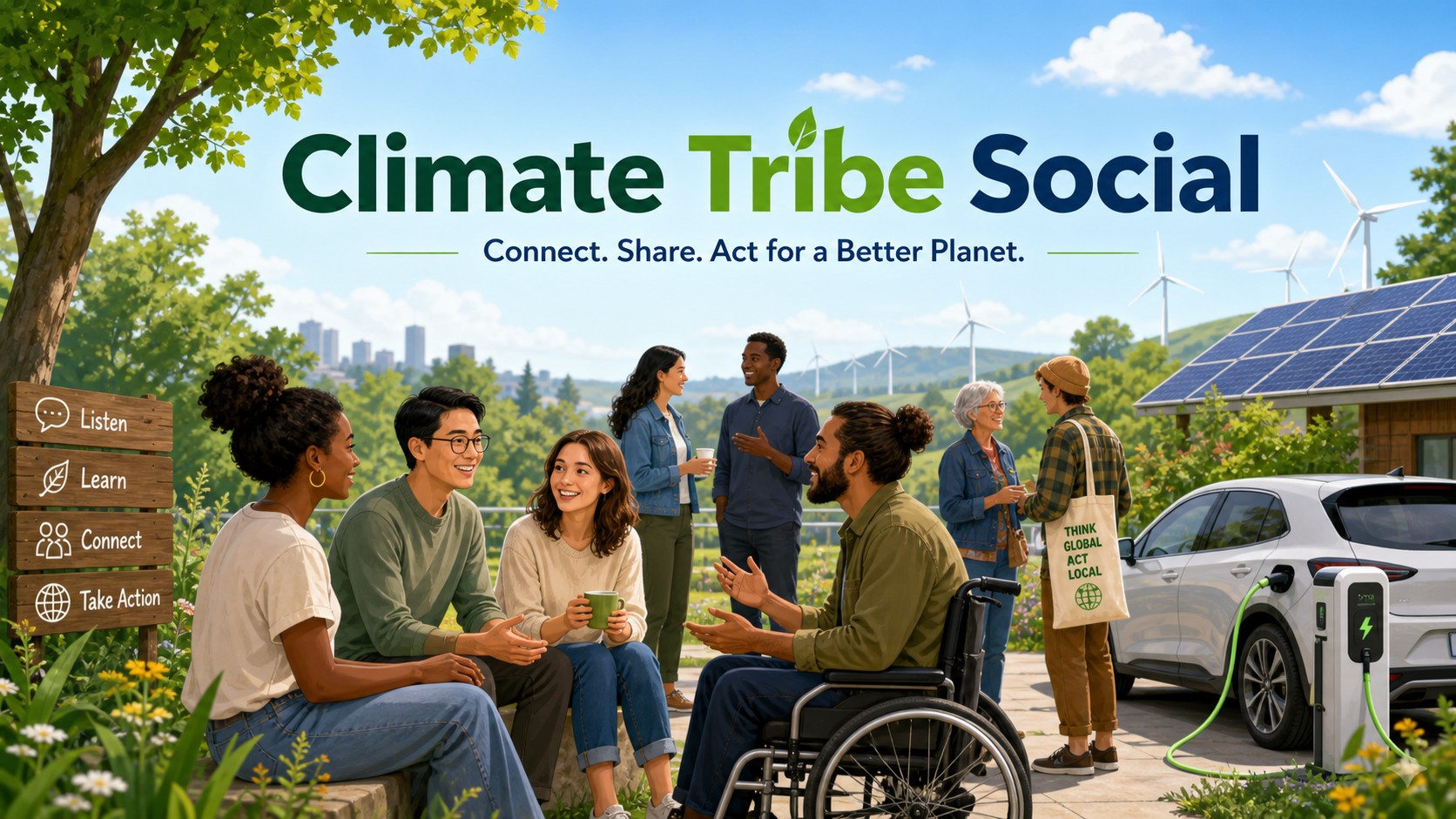
This is the foundation for Climate Tribe Social, a human-first network built not around popularity, but around compassion, respect, and emotional maturity.
Why Climate Tribe Social Is Different From Typical Social Media
Most social-media platforms profit from anger, division, and speed.
They are designed to keep people scrolling, not healing.
Arguing, not connecting.
Consuming, not understanding.
The result?
- Kind people grow silent.
- Hateful voices grow louder.
- Scientists are drowned out by conspiracy.
- Youth lose safe places to express fear and hope.
- Communities become more divided at the very moment they need unity.
This is not an accident.
It is the predictable outcome of platforms built around algorithms, not empathy.
Climate Tribe Social rejects that entire model.
Here, respect is not “nice to have”—it is required.
Kindness is not a weakness—it is a community strength.
And facts are not opinions—they are our compass.
We are building a place where:
- Humans come before hashtags.
- Conversations are guided by care, not competition.
- Science holds the lantern.
- Everyone’s voice is treated with dignity.
This is not social media.
This is social humanity.
Our Core Community Principles
1. Kindness and Respect First
We cannot build a climate-resilient future if people do not feel safe speaking. In Climate Tribe Social, every person is treated as a valued human being—not a target for hostility.
If something goes wrong, we don’t escalate—we talk.
A small restorative conversation helps repair trust and rebuild understanding.
2. Responsibility and Maturity
Our Spaces function best when people show sincerity, emotional steadiness, and clarity. We encourage thoughtful dialogue, careful listening, and humility in the face of new ideas.
3. Science as a Guiding Light
Climate solutions must be rooted in evidence.
When scientists join our community, they help illuminate paths forward, guide discussions, and share the meaning behind new research in plain language.
4. Freedom From Outside Control
No political party, no religious group, and no extremist ideology can dictate who we are or what we believe. Our focus is kindness, truth, and climate understanding—not dogma.
5. Real Human Connection
Whenever possible, we meet face-to-face or through video.
Real human eyes remove the sharp edges from digital communication.
Real voices carry warmth that text alone cannot.
These simple acts of humanity transform strangers into allies.
How Our Face-to-Face Design Strengthens Community
Restorative Conversations
If someone is hurt—even unintentionally—we address it gently with a short, respectful dialogue. Healing—not punishment—is the path.
Science-Guided Sharing
Experts help translate new research so members can act on it rather than get overwhelmed by the complexity of climate science.
Shared Accountability
Everyone revisits our kindness commitments.
This isn’t policing; it’s reminders that we are all capable of growing better together.
Action Without Ideology
Plans are shaped by community needs and scientific understanding—not political agendas.
How You Can Be a Part of This New Direction
- Affirm the Kindness Commitment
By joining, you promise to treat others with dignity and sincerity. - Support Science and Fact-Based Learning
Invite or nominate researchers, educators, or environmental experts. - Use Restorative Conversation When Needed
If something feels hurtful, we address it early and with care. - Invite People Who Value Respect
This community grows through kindness, not clicks.
Scientific Addendum: Why Kindness and Collaboration Matter in a Climate Emergency
Much of climate science focuses on emissions, warming curves, sea-level rise, extreme weather, and biodiversity loss. But scientists across multiple fields—from psychology to public health to adaptation policy—agree on an overlooked truth:
Human behavior, cooperation, and emotional resilience directly influence survival.
1. Communities with strong social bonds survive disasters better.
Decades of research from disaster-response agencies show that neighborhoods with strong trust and communication experience:
- faster evacuations
- lower casualties
- quicker rebuild times
- fewer instances of panic or misinformation
2. Misinformation increases climate harm.
Studies from major climate research centers show that denialism and false narratives slow down adaptation planning, confuse vulnerable communities, and weaken support for protective measures.
3. Psychological resilience impacts physical resilience.
People who feel connected, understood, and supported are:
- more likely to prepare
- more willing to adapt
- more open to learning
- less likely to freeze during emergencies
4. Cooperation reduces risk.
Shared knowledge—especially between scientists, civilians, youth leaders, and front-line workers—creates more effective neighborhood-level climate responses.
5. Hostile environments drain problem-solving ability.
Stress, fear, and online cruelty increase cortisol levels and reduce critical-thinking capacity. In a climate emergency, this is dangerous.
Kindness is not soft.
It is strategic.
It is resilience.
It is survival.
A Gentle Emotional Closing: Choosing Humanity Every Day
There is something powerful about a stranger stepping forward to help you.
No questions.
No judgment.
Just humanity in its pure form.
In the middle of a storm, a firefighter doesn’t ask who you voted for.
A nurse doesn’t check your beliefs before saving your life.
A teacher doesn’t turn a child away because of family background.
A neighbor doesn’t ignore you when floodwater rises at your doorstep.
These everyday acts of compassion remind us who we truly are—and who we can be again.
Climate Tribe Social is built on that spirit.
A place where we lift each other.
Where kindness is a habit.
Where respect is expected.
Where science meets humanity.
Where people rediscover what it means to belong to a caring, thoughtful community.
Thank you for walking this path with me.
The work is urgent.
The stakes are high.
And the future truly belongs to those brave enough to choose humanity over cruelty—again and again, until kindness becomes the new normal.
— Mr. Alvarez
Content Curator, Climate Change Community and all Child-Sites